 DigiGrowvity
A machine rarely fails without warning. The belt was loose last month, the oil was due two weeks ago, and nobody wrote either down. Maintenance software for small factories turns those half-remembered chores into a list with owners and dates. In JULIO ERP the Maintenance module gives every machine its own card, records each repair or service as a request, and shows your maintenance team what is waiting for them today.
What maintenance software for small factories tracks
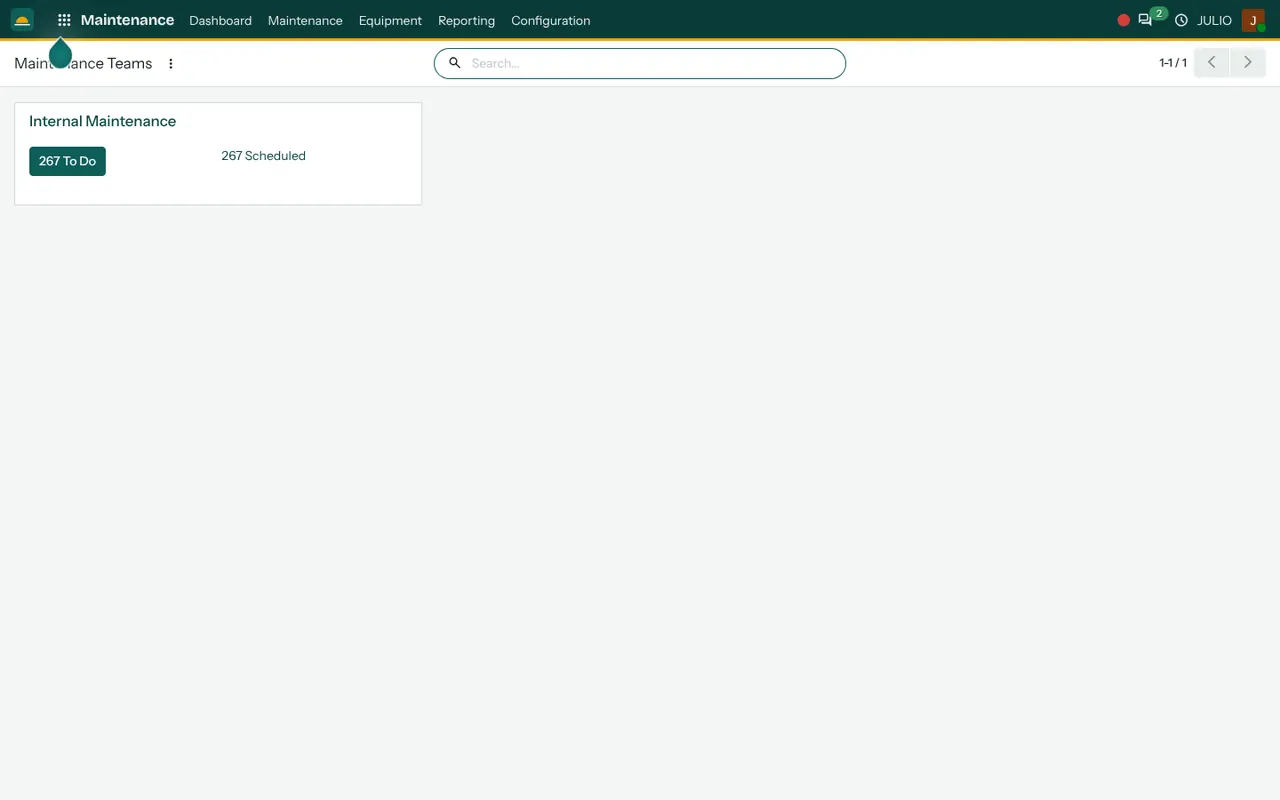
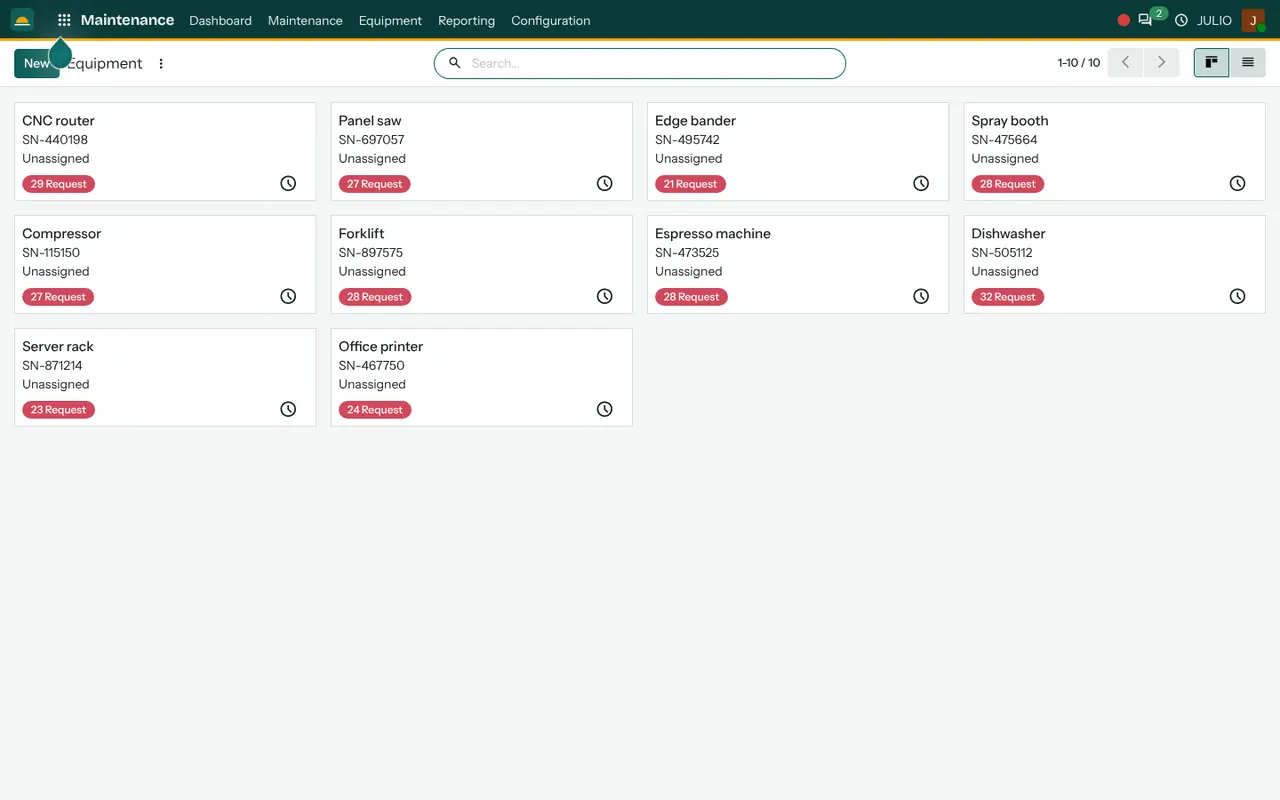
The two screens above show a team dashboard and the equipment list from the demo business.
A card for every machine
The equipment screen shows one card per item: a CNC router, a panel saw, an edge bander, a spray booth, a compressor, a forklift, an espresso machine, a dishwasher, a server rack and an office printer. Each card carries the name, a serial number and the person responsible, which reads Unassigned until you pick someone. Offices and canteens can sit in the same list as machines.
Requests counted on the card
On each card a red badge shows how many requests the item has, such as 29 for the router. A glance tells you which machine causes the most trouble, which is the number to take to the supplier when you argue about a replacement.
A team dashboard
The first screen is a card for each maintenance team. The Internal Maintenance card in the demo shows a green "To Do" button with a count and a separate count of scheduled jobs. A supervisor clicks the count and lands on exactly those requests.
Corrective and preventive work
Good maintenance software for small factories separates two kinds of job. A breakdown is a corrective request, logged when something has failed. A preventive request is planned in advance and can repeat at a set interval, so the oiling or the filter change comes back on its own. Both kinds live in one list, which keeps the plan honest.
A trail for each machine
Every request is tied to the equipment it concerns, with a date and the person who dealt with it. When a machine is sold or condemned, you can see its whole history in one place.
How maintenance software for small factories fits the ERP
Maintenance does not stand alone, and maintenance software for small factories works best when it shares a database with production. The machines in your factory are the ones making products in Manufacturing, so a breakdown explains a late batch. A spare part you hold is a product in Inventory, and one you must order goes through Purchase. The people doing the work are the staff in Employees, and a repair task that needs scheduling can be shown in the shared Calendar. For a vehicle rather than a machine, see Fleet.
A short walk through a spray booth service
A joinery using maintenance software for small factories has a spray booth that clogs its filter every few weeks. The owner creates a preventive request on the booth's card and sets it to repeat. A fortnight before the date it appears on the Internal Maintenance count. The technician opens it, changes the filter and closes the request. Weeks later the booth fails anyway, and a corrective request is logged against the same card. Now the card shows two kinds of work side by side, which is the evidence the owner needs to decide whether a new booth is cheaper.
| Question | Where you look |
|---|---|
| What is waiting for the team? | The To Do count on the dashboard |
| Which machine fails most? | The request badge on its card |
| What is planned ahead? | The scheduled count and the calendar |
| Who looks after it? | The responsible person on the card |
Who starts with maintenance software for small factories
Businesses with machines or equipment to look after commonly add this module early. Open a page to see the common starting set for that business.
Before you use maintenance software for small factories
The software is simple. The value comes from the list of equipment you enter on day one, because maintenance software for small factories can only track what it has been told exists. A thorough first pass saves many later corrections.
- A list of machines. Walk the floor and note each item with its serial number and location. Include small items that stop work when they break, such as printers.
- A person for each. Give every machine an owner, even if the owner is the supervisor.
- Preventive intervals. Take the makers' manuals and decide which jobs repeat, and how often.
- Teams. Decide whether one maintenance team is enough or whether electrical and mechanical work are separate.
- Who raises requests. Allow operators to log a fault themselves, so problems are recorded when they happen.
Conclusion
Maintenance software for small factories pays for itself by making breakdowns visible and planned work routine. At DigiGrowvity we set up JULIO ERP for growing businesses, and in our experience setting up ERP projects the equipment list is usually the part owners are surprised to find they never had. Once it exists, Manufacturing and Purchase can use it, and each request has a machine, a person and a date.
Key Takeaways
- Maintenance software for small factories gives every machine its own card with a serial number and an owner.
- A badge on each card counts how many requests the machine has had.
- The team dashboard shows the To Do count in one click.
- Preventive work can repeat on a schedule; breakdowns are logged as they happen.
- It is included in the ₹10,000 JULIO Local plan.