 DigiGrowvity
A small hotel is a house with a front door and a payroll. Rooms get the attention, yet most of the daily friction sits behind them: a wedding group that wants a quote, a company that is billed monthly, a housekeeping team on rotating shifts. ERP for small hotels covers that back office. JULIO ERP does not replace a room-booking system, and this page says so openly, but it handles quotations, diaries, invoices and staff time well.
What ERP for small hotels needs to do
A hotel is a service business with a long list of small tasks, and many of them repeat daily. Here is what ERP for small hotels can reasonably take on.
| Need | Module that covers it |
|---|---|
| Shared diary for events and visits | Calendar |
| Quotes for groups and functions | Sales |
| Bills for companies and agents | Invoicing |
| Staff records by department | Employees |
| Who is on shift today | Attendances |
- A diary that everyone reads. Site visits, function dates and staff leave should be seen by reception, sales and the manager alike.
- Quotations for groups. A wedding or conference needs a priced offer that the client can approve.
- Billing on credit. Corporate clients and travel agents settle monthly, so unpaid invoices must be tracked.
- Staff on rotating shifts. Reception, housekeeping and kitchen teams change by the day.
- Clear records for a small team. A hotel with thirty staff still needs one place for their details.
The common starting set for ERP for small hotels
Most ERP for small hotels begins with the five modules below. It is a common set, and we confirm yours in discovery.
 CalendarMeetings and schedules
 SalesQuotations, orders and follow-ups
 InvoicingInvoices, bills and payments
 EmployeesStaff records in one place
 AttendancesCheck-ins and working hours
Calendar, one diary for the property
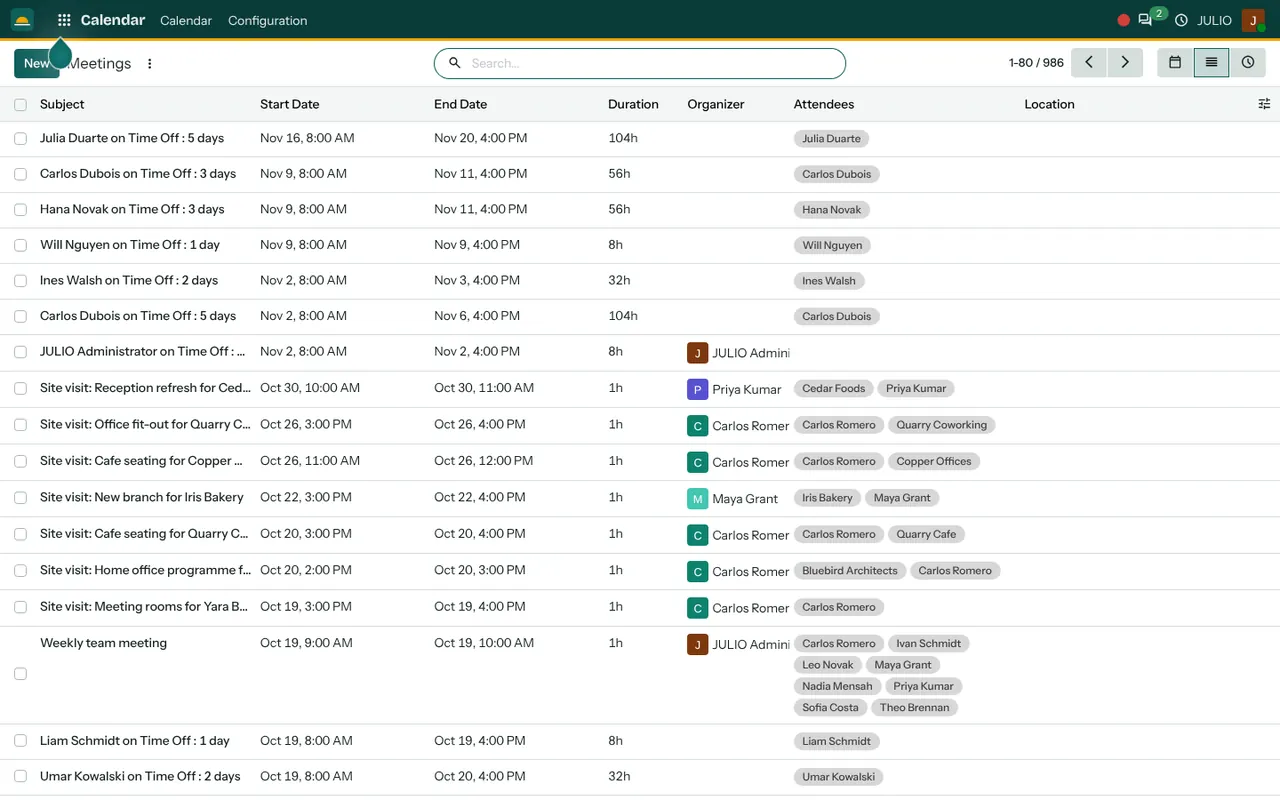
The shared calendar lists meetings with a subject, start and end, duration, organiser and attendees. Staff leave appears in it too, so a function date is never planned against a missing team. See the Calendar module.
Sales for quotations and packages
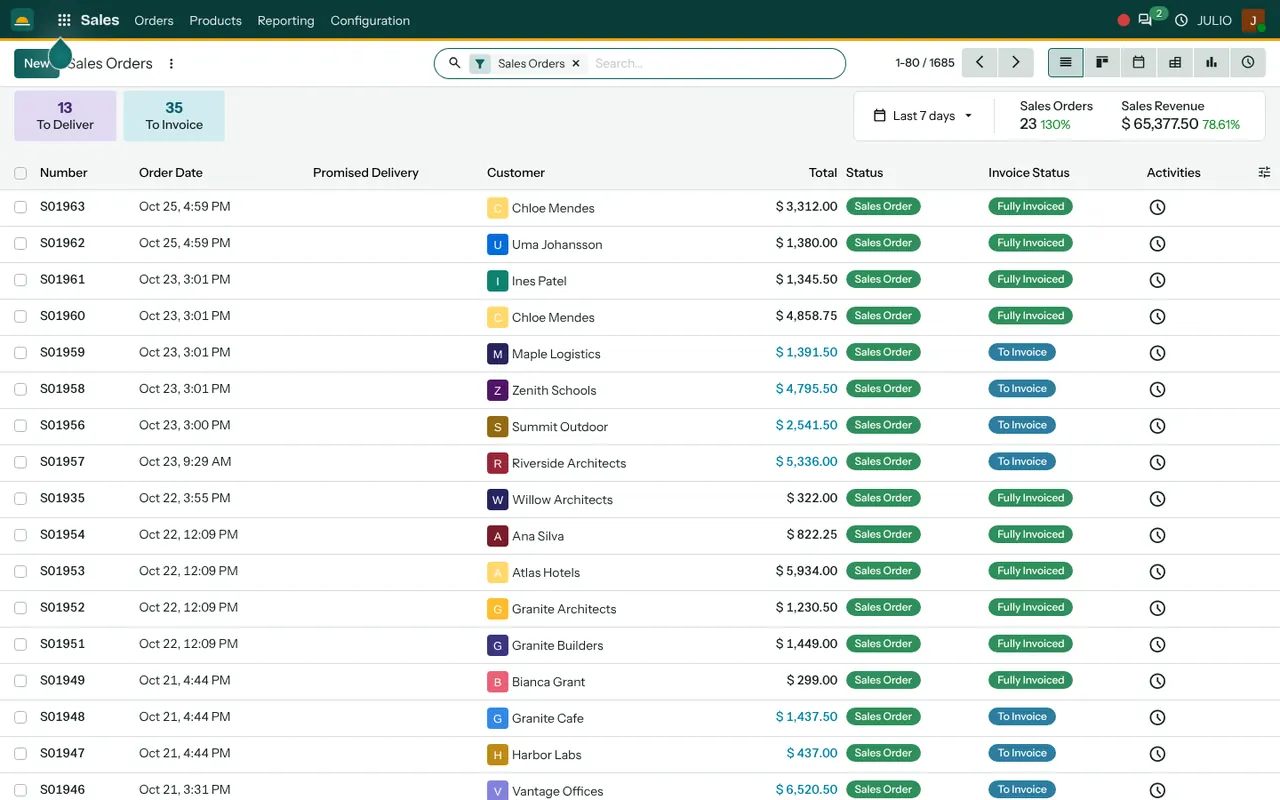
A group quotation becomes a confirmed order and then an invoice, so the price the family approved is the price that gets billed. The sales list counts orders still to invoice, which is a handy morning check for a hotel's accounts desk. See the Sales module.
Invoicing for corporate accounts
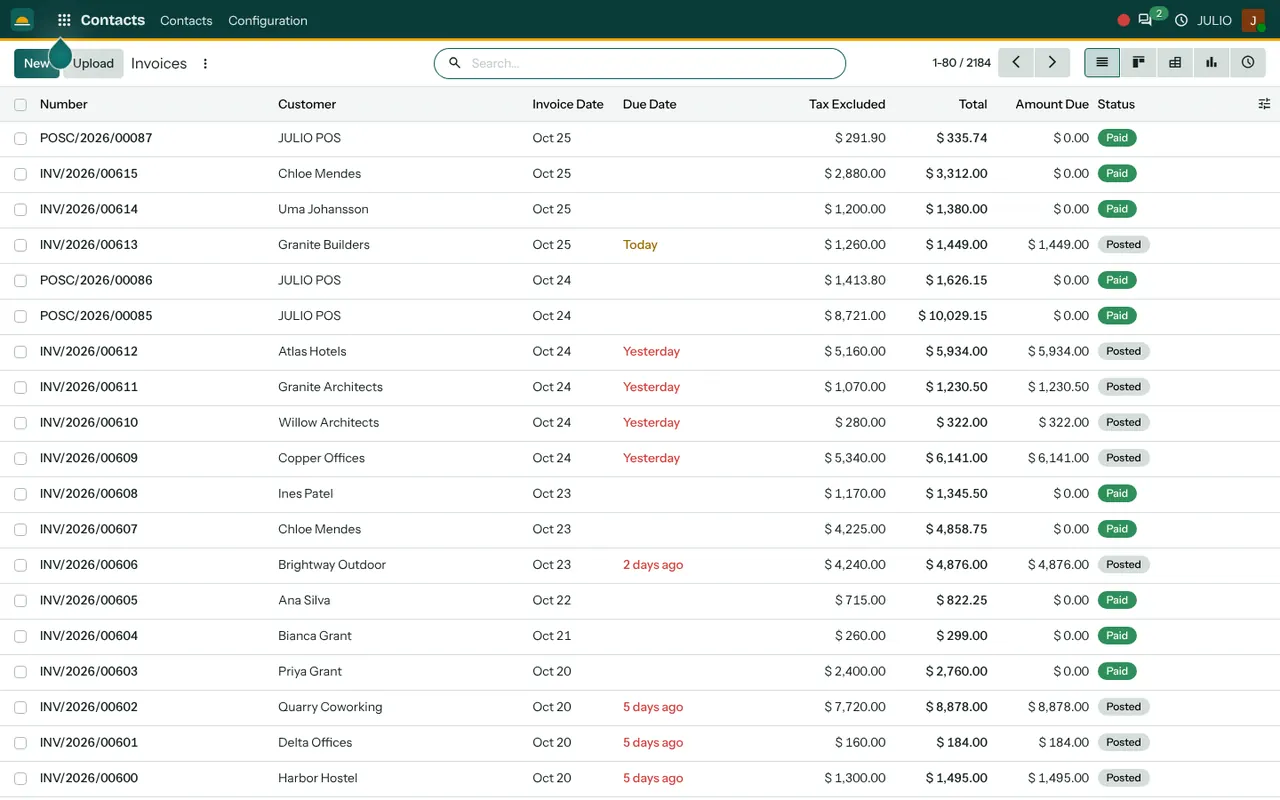
Invoices show a due date and an amount due, and those overdue turn red. A hotel with a few corporate accounts can see at a glance who is late. See the Invoicing module.
Employees, the staff directory
Each employee has a record, and departments group them as front office, housekeeping or kitchen. When a new cook joins, the manager adds one record instead of updating three lists. See the Employees module.
Attendances for shifts
Check-in and check-out times are recorded with the hours worked, and a kiosk mode lets staff clock in at a shared screen. See the Attendances module.
What ERP for small hotels looks like in JULIO
The screens below are real and come from the JULIO demo database. It holds demo data for a furniture and fit-out firm, so the customer names are not hotels.
What JULIO does not do for hotels
This is the most important section on the page. JULIO is not a property management system. A room inventory with an availability chart, rate plans by season, a booking engine on your website, a channel manager that talks to online travel agents, guest registration forms for foreign visitors and key-card control are not in the standard set. If you need rooms, you need a room system alongside, or custom work, quoted separately.
How a first release of ERP for small hotels could look
A first release of ERP for small hotels can be modest. Start with attendances and the staff directory, which are easy to learn and show results in a week. Move the function and group diary into Calendar next, so reception, sales and housekeeping read the same dates. Then run quotations through Sales and invoices through Invoicing for corporate and agent accounts.
Room bookings stay in whatever system you use today, so nothing at the front desk changes on day one. That is deliberate, and it is why the risk stays low. Once the team trusts the back office, you can decide whether a room system is worth connecting, and we would scope that honestly with you.
A wedding enquiry, handled end to end
A family asks about a two-day wedding at a resort. The sales manager prices the stay and the hall as a quotation, sends it, and confirms it when the family agrees. The date goes into the shared diary, where the housekeeping lead sees it. On the day, attendances show how many staff have checked in. After the event, the invoice goes out and its due date is tracked. For small properties, ERP for small hotels works best as exactly this kind of thread, from enquiry to payment.
Conclusion
ERP for small hotels does the unglamorous work that keeps a property calm: diaries, quotes, invoices and rosters. At DigiGrowvity, we set up JULIO ERP for growing businesses, and in our experience of setting up ERP projects, the best first step is the one with the least risk, which here is staff and function records. We have not published a hotel project, so this is a common starting set that we confirm with you.
Key Takeaways
- ERP for small hotels covers the back office: diary, quotes, invoices, staff and shifts.
- The usual starting set is Calendar, Sales, Invoicing, Employees and Attendances.
- JULIO is not a room-booking or channel-manager system.
- Room inventory, rate plans, booking engines and guest registration are custom work, quoted separately.
- The plan is ₹10,000 once, with unlimited users and 1 year of free support.