 DigiGrowvity
A gym earns its money in two moments: when a walk-in becomes a member, and when that member renews. Everything in between is the floor, the trainers and the timetable. ERP for gyms means one system that remembers every enquiry, bills every renewal and reminds members before they lapse. JULIO ERP offers that with no limit on staff users on your own network, so the front desk and the owner see the same list.
What ERP for gyms needs to do
ERP for gyms has to fit a small business with a very repetitive pattern, and the pattern is where the money leaks. Five needs come up again and again.
- Enquiries that are not forgotten. Someone walks in, looks around and says they will think about it. Without a record, nobody calls.
- Renewals that happen on a date. A member whose plan ends on the 12th should be reminded on the 5th, not discovered missing on the 20th.
- A timetable people can trust. Batches, trainer slots and personal sessions need to sit on a shared calendar.
- Fees collected and written down. Cash at the desk, UPI on the phone and cheques from corporate tie-ups all need to land in one ledger.
- Trainer and staff records. Joining dates, roles and who covers which shift.
| Need | Module that covers it |
|---|---|
| Walk-in enquiries and trials | CRM |
| Membership invoices and receipts | Invoicing |
| Batches and trainer slots | Calendar |
| Trainer and desk staff records | Employees |
| Renewal and offer reminders | SMS Marketing |
The common starting set for ERP for gyms
The usual first set for ERP for gyms is these five modules, and we confirm yours in discovery. Each one links to its own page.
 CRMTrack leads and close deals
 InvoicingInvoices, bills and payments
 CalendarMeetings and schedules
 EmployeesStaff records in one place
 SMS MarketingText message campaigns
CRM for walk-ins and trials
Treat each enquiry like a small deal. A walk-in becomes a card, a free trial moves it one column along, and a joining fee closes it. The owner can see how many enquiries are still open instead of trusting memory. See the CRM module.
Invoicing for fees and renewals
Every membership is an invoice, and every payment is matched to it. Unpaid dues show up with a status and a due date, so the desk can see who has not renewed. See the Invoicing module.
Calendar for batches and sessions
Morning and evening batches, a yoga hour, a personal training slot with a named trainer: each can be a meeting on a shared calendar with attendees. See the Calendar module.
Employees for trainers and desk staff
Each trainer has a record with role and joining date, grouped by department. See the Employees module.
SMS Marketing for reminders and offers
Text messages are how members actually read things. A campaign has a title, a send date and a status, and the module shows how many were sent. See the SMS Marketing module.
What ERP for gyms looks like on screen
These are real screens from the JULIO ERP demo. The demo company sells fit-outs and furniture, so every name and figure is demo data, and none of it is a gym.
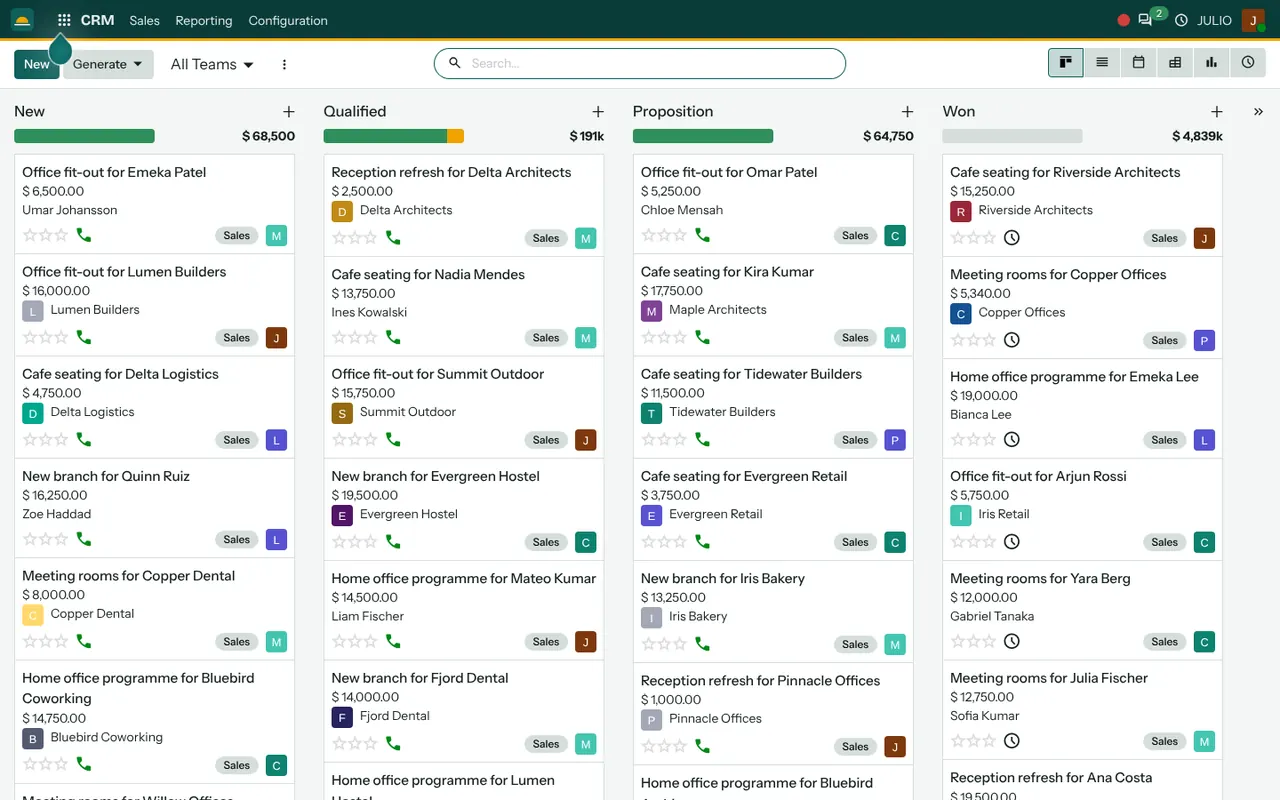
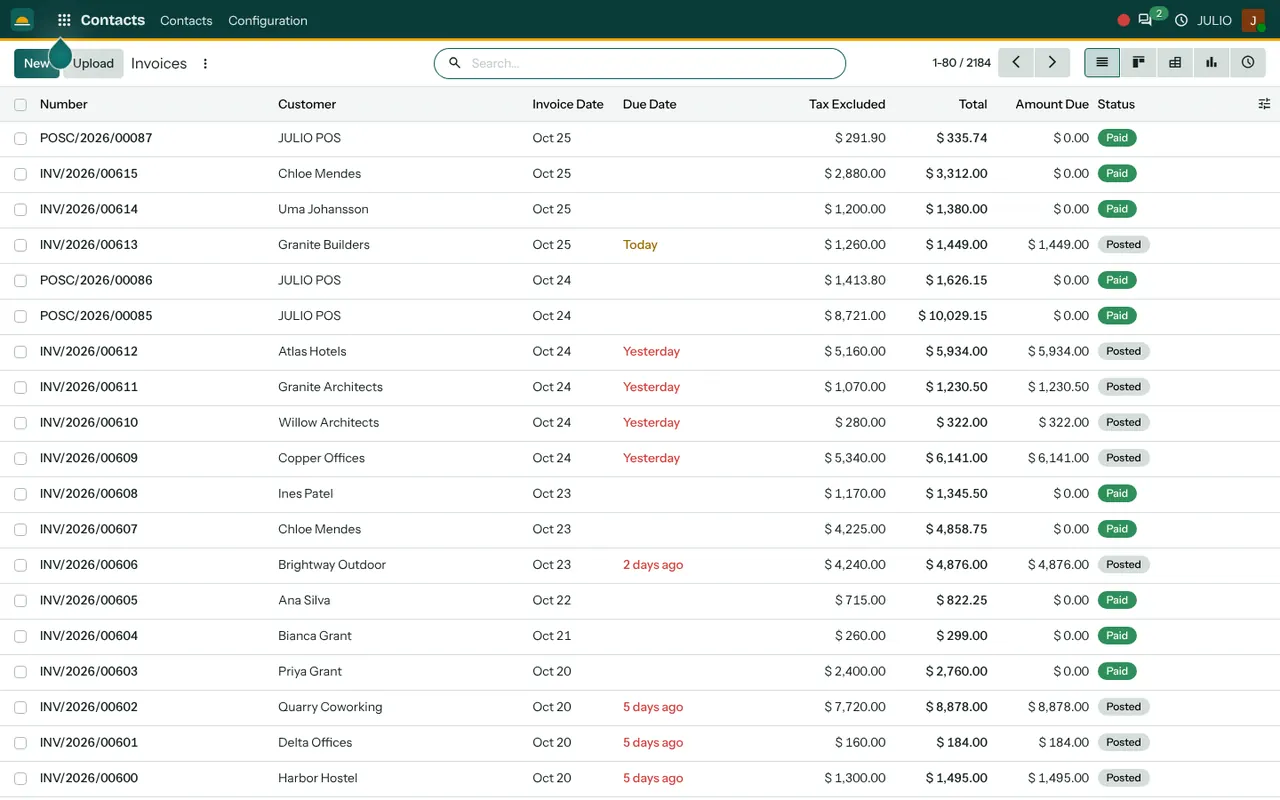
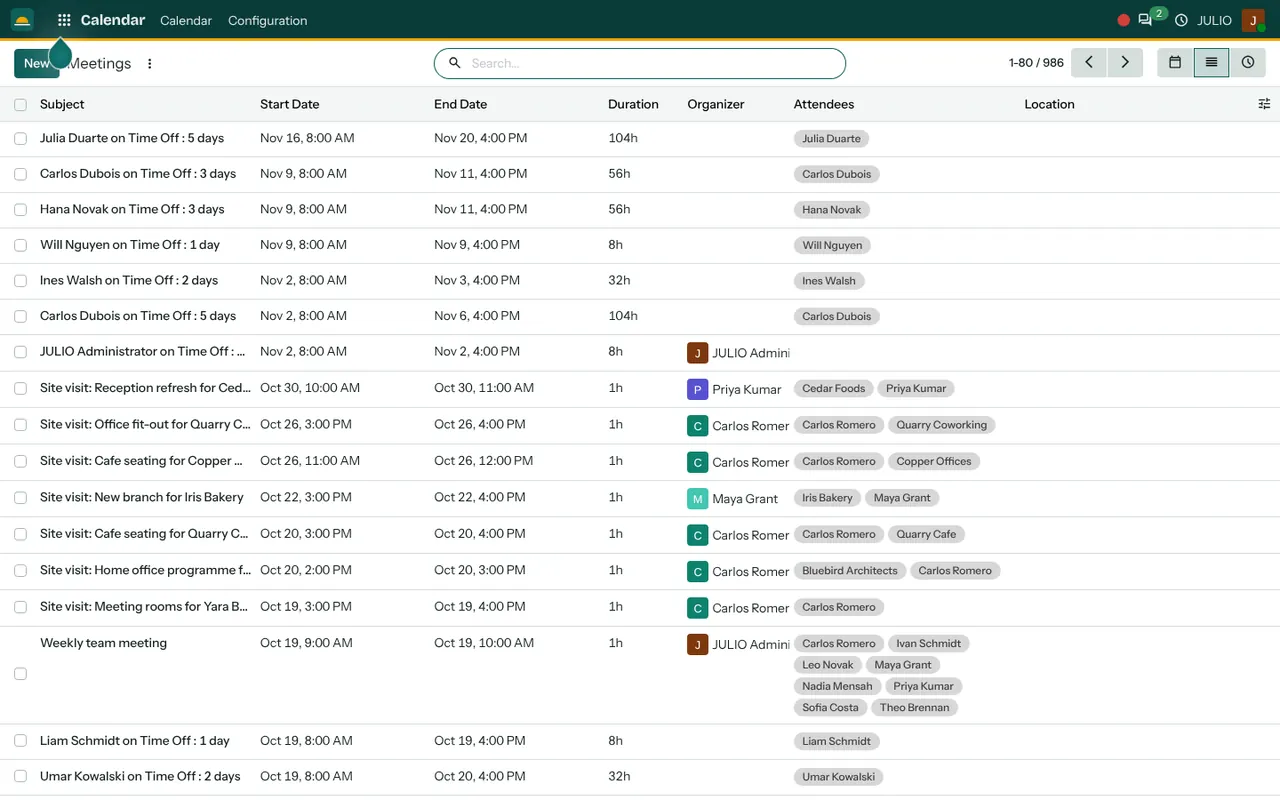
The first screen is the CRM pipeline board, with cards sitting in columns named New, Qualified, Proposition and Won, each column showing a total. A gym using ERP for gyms would rename the columns to something like Enquiry, Trial and Joined, so the board reads in the owner's own words. The second is the customer invoice list, with a number, customer, due date, amount due and a Paid or Posted label. The third is a list of meetings with an organizer and attendees.
What JULIO does not do for gyms
Please read this part before you decide, because ERP for gyms from JULIO stops at the edge of the software.
- It is not a door-access or turnstile controller. Linking fingerprint or RFID entry to membership status is custom work, quoted separately.
- It does not run a member app for class booking. A booking app or website booking page is custom work as well.
- It does not file your tax returns. It keeps the invoices; your accountant files.
- Sending text messages through an SMS provider may carry a per-message charge, and India has its own registration rules for promotional texts. Those charges are not part of the plan.
How a first release of ERP for gyms could look
A first release of ERP for gyms starts with the money and the memory. Load your current members as contacts, set up one invoice for each membership type, and put this week's walk-in enquiries on the pipeline board. Let the desk use that for a full renewal cycle, because that is the first time the system proves itself.
The calendar for batches and the trainer records can come next, since they are easy to enter and nothing depends on them yet. Staff learn the screens by using them on real members, not in a training session. Text reminders come last, once the member list is clean. A messy list sends the wrong reminder to the wrong person, which is worse than sending none.
Conclusion
ERP for gyms is not about fancy dashboards. It is about the walk-in who gets a call back and the member who gets a reminder before the plan ends. At DigiGrowvity, in our experience setting up ERP projects, the businesses that do well are the ones that begin with one daily routine and make it dependable. For a gym that routine is enquiry, trial, joining, renewal.
Key Takeaways
- ERP for gyms must cover enquiry follow-up, renewal billing, a class timetable, staff records and member reminders.
- The common starting set is CRM, Invoicing, Calendar, Employees and SMS Marketing.
- Door-access hardware and member booking apps are custom work, quoted separately.
- JULIO runs on your own network with no limit on users.
- The plan is ₹10,000 once, with 1 year of free technical support.