 DigiGrowvity
An online store feels simple until the orders arrive. The shop says a kurta is in stock, the packing table says it left on Tuesday, and the accounts person is still waiting for last week's sales sheet. ERP for ecommerce businesses is the plan to make those three agree. JULIO ERP gives an online seller one system for the shop, the stock behind it, the invoices that follow and the emails that bring buyers back.
What ERP for ecommerce businesses needs to do
ERP for ecommerce businesses has to cope with pressure that a physical counter never feels. Orders arrive at any hour, and a buyer cannot see the shelf.
| Need | Module that covers it |
|---|---|
| A shop that sells what exists | E-commerce |
| One stock figure for every sale | Inventory |
| Invoices, refunds and payments | Invoicing |
| Reaching past buyers again | Email Marketing |
| A daily read on the numbers | Dashboards |
- Stock that is honest. Overselling is the commonest complaint: a buyer pays for an item that has already gone, and a refund and an apology follow.
- Orders that flow without retyping. An order should become a pick list, a parcel and an invoice without anyone copying details between sheets.
- Returns and refunds. Parcels come back, so a return must put the item back in stock and settle the money cleanly.
- Repeat custom. Past buyers need a simple way to hear from you.
- Daily numbers. An owner needs yesterday's orders, what is waiting to ship and what is owed before the day's packing starts.
The common starting set for ERP for ecommerce businesses
Most sellers who ask for ERP for ecommerce businesses begin with these five modules. Each links to its own page, and we confirm yours in discovery.
 E-commerceSell online from live stock
 InventoryStock across every warehouse
 InvoicingInvoices, bills and payments
 Email MarketingCampaigns and newsletters
 DashboardsLive numbers for the whole business
E-commerce, the shop itself
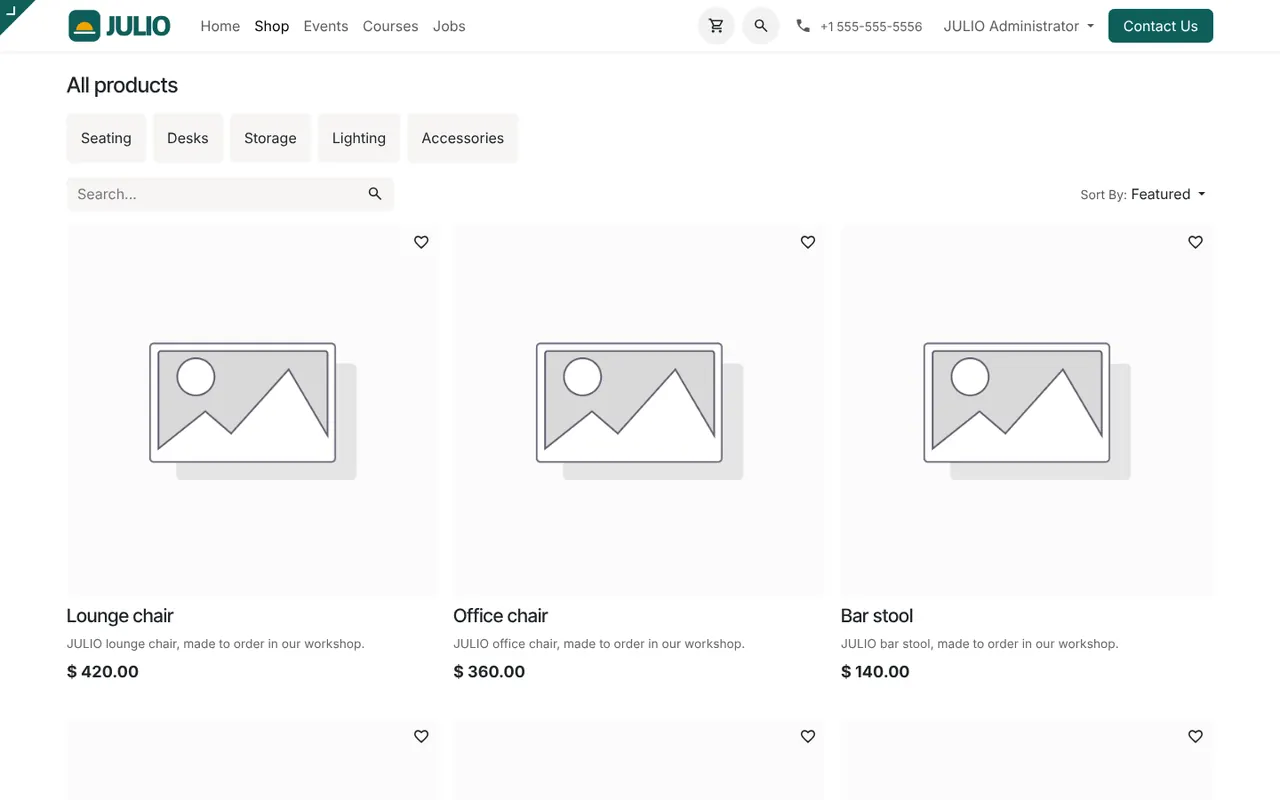
JULIO includes an online shop, so the catalogue can be sold straight from the stock it holds. The demo shop lists products under categories, with a search box, a sort order and a wishlist heart on each item. Read the E-commerce module to see how the shop and the back office share one product list.
Inventory, the single stock figure
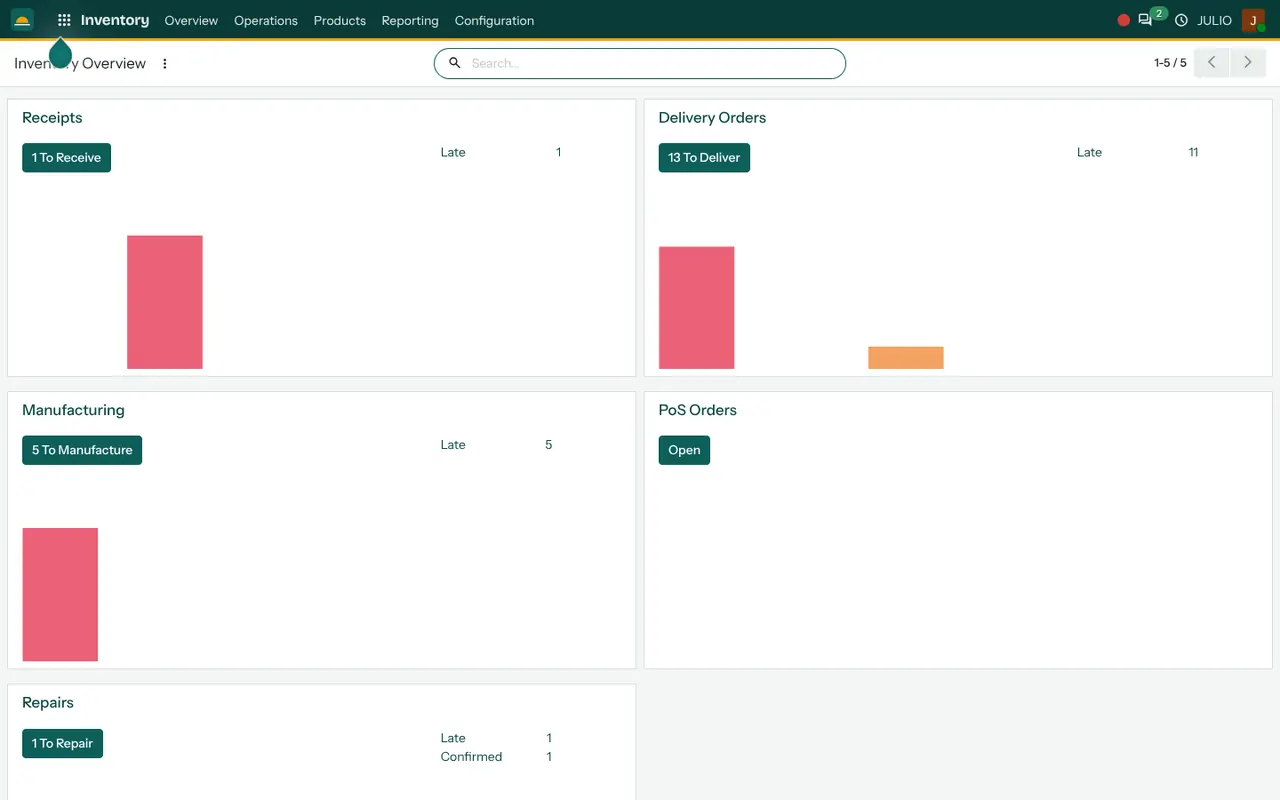
Online selling lives or dies on the stock number, so every sale, receipt and return changes the same record. The Inventory module also shows deliveries waiting to go out, which is the packing table's to-do list.
Invoicing, bills and refunds
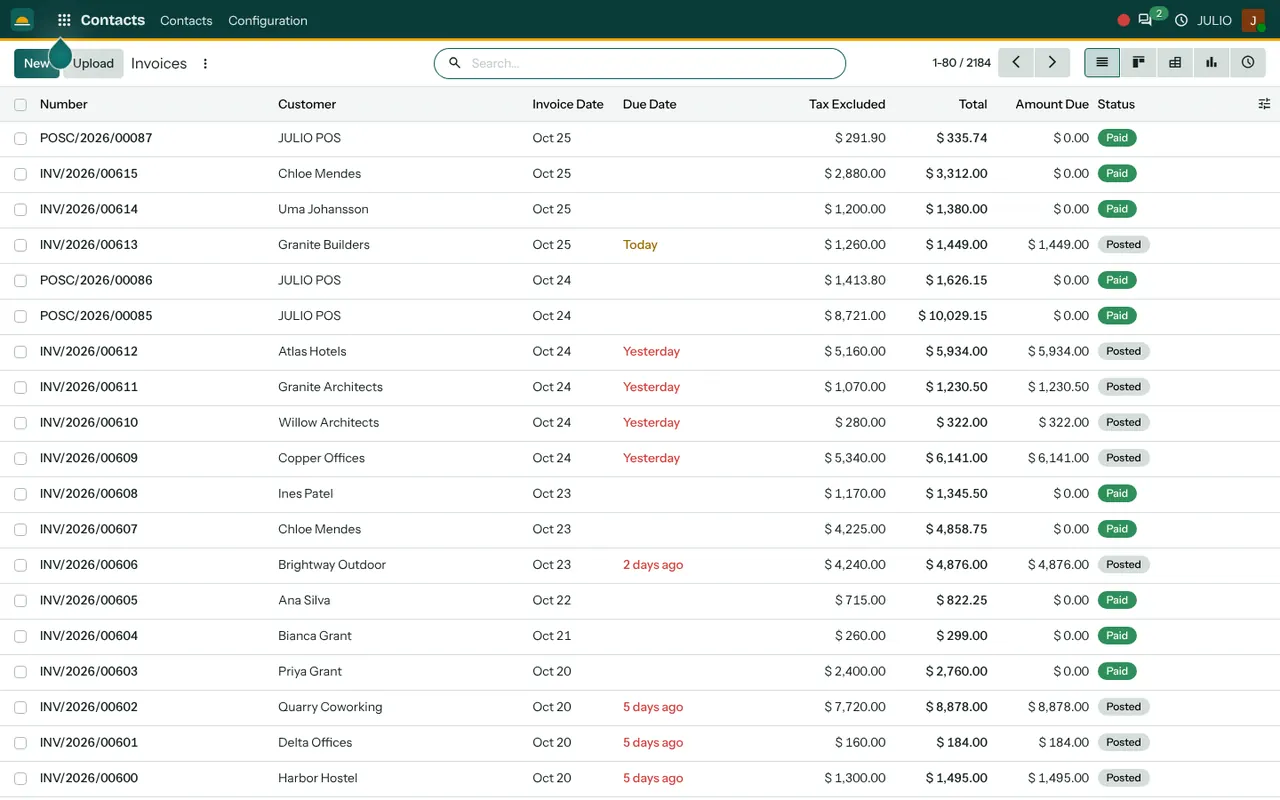
Each order needs a bill, and each return needs a credit. The Invoicing module keeps customer invoices, vendor bills and payments together, so what the courier collected and what the bank received can be matched.
Email Marketing, the way back to buyers
A mailing to past buyers is the cheapest sale an online store makes. The Email Marketing module sends campaigns to mailing lists and reports sent, delivered and opened figures for each one.
Dashboards, the morning read
The Dashboards module puts shop sales, orders to ship and money owed on a few screens, so the owner reads the business before packing starts.
What ERP for ecommerce businesses looks like in JULIO
For an online seller, these are real screens from the JULIO ERP demo, which uses demo data and is a furniture business, not an online fashion store.
Our own experience with an online store
We run the LAMBLILY online store, and our ERP work for LAMBLILY includes an hourly, read-only sync that brings orders from the shop into the ERP. Nothing in the ERP can alter the shop, which keeps the live store safe, while the back office still sees every order close to when it was placed. For other industries, this page lists only a common starting set, and we confirm what your store needs in discovery.
What JULIO does not do for ecommerce businesses
It is better to know the limits before you start. JULIO is a back-office system with its own shop, so ERP for ecommerce businesses on JULIO still has edges where extra work is needed.
- Marketplace links. Connecting to Amazon, Flipkart or Myntra seller accounts is custom work, quoted separately.
- Courier and payment gateway links. Rate lookup, label printing and gateway-specific settlement files are scoped with you, and custom connections are quoted separately.
- Tax filing. JULIO prepares GST-ready records, but filing returns is done on the government portal with your accountant.
- Photography and product copy. The shop shows what you put in; it does not write or shoot for you.
- A mobile shopping app. The shop is a website. A native app is a separate build.
How a first release of ERP for ecommerce businesses could look
For a single store, a sensible first release of ERP for ecommerce businesses is stock and invoices. The product list is cleaned, opening stock is counted and loaded, and every order is entered or brought in so that invoices and the stock figure follow. Once the team trusts the stock number, and the first release of ERP for ecommerce businesses has settled, the shop runs from it and past buyers are loaded into a mailing list. Dashboards come last, because they only repeat what the records already hold. You can stop after any step and still have a working system.
Conclusion
ERP for ecommerce businesses should make a busy day quieter, not busier. At DigiGrowvity, we set up JULIO ERP for growing businesses, and in our experience an online seller gets the most from the first release when the stock figure and the invoices are right before anything fancy is added. Then the shop, the Email Marketing lists and the Dashboards all work from numbers you can trust.
Key Takeaways
- ERP for ecommerce businesses needs one honest stock figure, orders that flow to invoices and clean returns.
- The usual starting set is E-commerce, Inventory, Invoicing, Email Marketing and Dashboards.
- We run LAMBLILY's online store with an hourly, read-only order sync into the ERP.
- Marketplace, courier and gateway links are custom work, quoted separately.
- The plan is ₹10,000 once, with unlimited users and 1 year of free support.