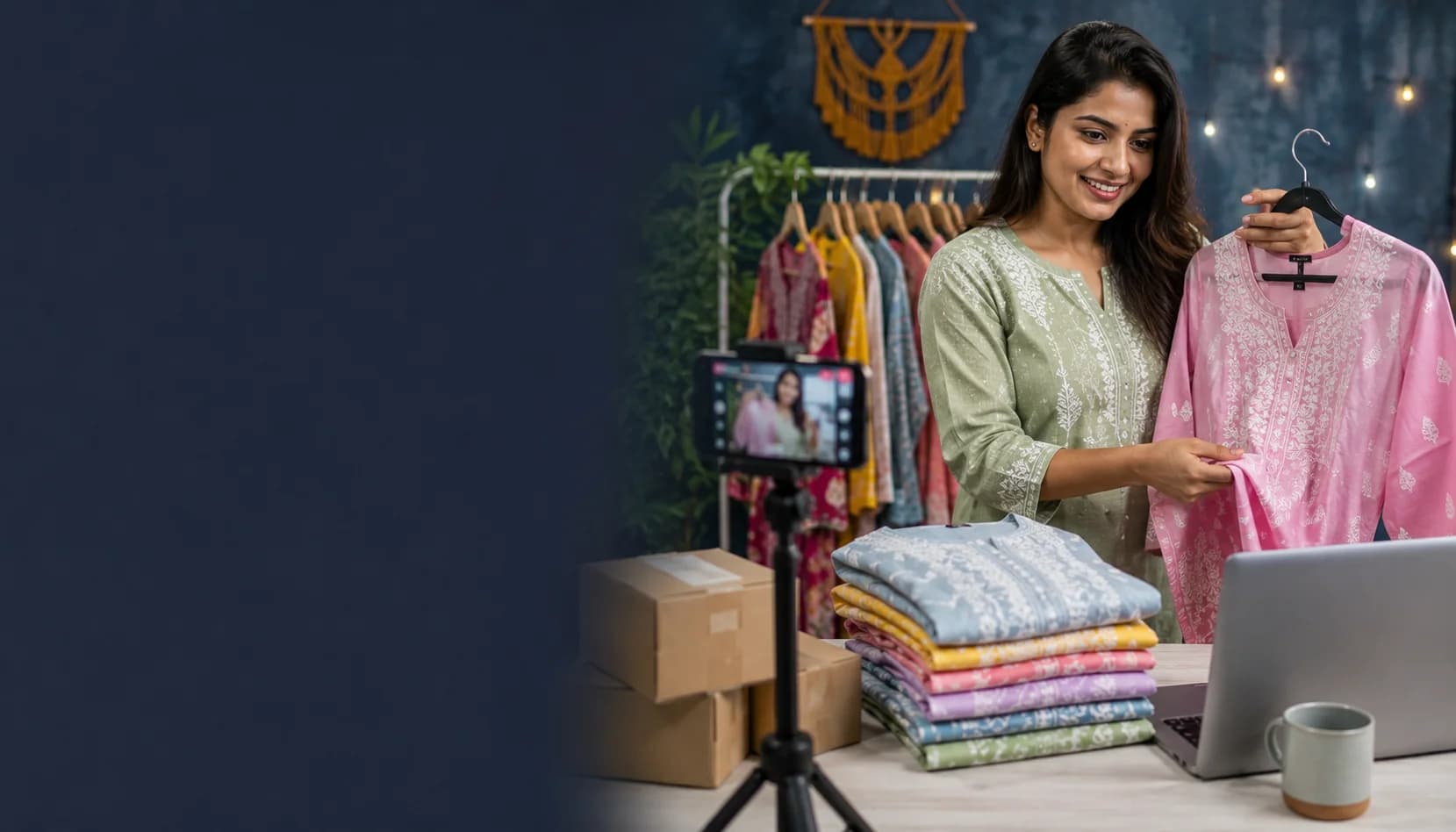
While most stores still run the same campaigns that worked in 2023, a smaller group is already testing what actually works next. This gap widens every quarter, and it rarely closes on its own, since e-commerce brands dominate 2026 by acting before the gap becomes obvious to everyone else.
E-commerce brands dominate 2026 by running seven specific campaign types right now, ahead of the curve rather than reacting once these approaches become obvious to everyone else in the category.
Campaigns E-commerce Brands Dominate 2026 With
| # | Campaign Type | Why It Matters Now |
|---|---|---|
| 1 | AI-personalised recommendations | Higher relevance, higher order value |
| 2 | Short-form video-first strategy | Discovery shifting away from search |
| 3 | WhatsApp commerce campaigns | Direct, high-engagement channel |
| 4 | First-party data collection | Privacy shifts demand owned data |
| 5 | Community-led growth | Trust compounds through belonging |
| 6 | Values-driven messaging | Buyers increasingly choose on ethics |
| 7 | Omnichannel loyalty programs | Retention across every touchpoint |
Campaign 1: AI-Personalised Product Recommendations
Generic recommendations feel increasingly outdated to buyers used to genuinely personalised experiences elsewhere online. E-commerce brands dominate 2026 by investing now in AI-driven recommendation engines that learn from browsing behaviour, not just past purchases alone.
This technology requires meaningful data volume to function well, making early investment genuinely valuable before competitors catch up. Our e-commerce marketing guide covers the data foundation this personalisation ultimately depends on.
Campaign 2: A Genuine Short-Form Video-First Strategy
Product discovery increasingly happens through video, not text search alone. Brands still treating video as a secondary content format miss where buyer attention is actually shifting. E-commerce brands dominate 2026 by building video into the core of their content strategy, not as an afterthought.
Consistency matters more than production polish here. A steady stream of genuine, simple video content typically outperforms occasional, highly polished pieces released too infrequently.
Campaign 3: WhatsApp Commerce as a Primary Channel
Email open rates keep declining, while WhatsApp remains genuinely high-engagement for Indian audiences specifically. E-commerce brands dominate 2026 by treating WhatsApp as a primary commerce channel, not a support afterthought, running structured broadcasts and automated order updates.
Our ecommerce advertising India guide explains how this channel complements paid acquisition rather than replacing it entirely within a complete marketing approach.
Campaign 4: First-Party Data Collection From Every Interaction
Privacy changes across major platforms make third-party tracking considerably less reliable than it once was. E-commerce brands dominate 2026 by building genuine first-party data assets now, email lists, WhatsApp opt-ins, and loyalty program data collected directly from customers.
This owned data becomes increasingly valuable as third-party targeting continues losing precision, giving early-investing brands a considerable, lasting advantage over slower-moving competitors.
Campaign 5: Community-Led Growth Over Pure Advertising
Paid advertising alone increasingly struggles against rising costs and shrinking attention. E-commerce brands dominate 2026 by building genuine communities, private groups, engaged social followings, that generate organic advocacy no advertising budget could fully replicate on its own.
This pattern takes longer to build than a paid campaign, but it produces considerably more durable, defensible growth once genuinely established within a specific, engaged audience.
Campaign 6: Values-Driven Messaging That Feels Authentic
Buyers increasingly research a brand's values before completing a purchase, especially among younger demographics. E-commerce brands dominate 2026 by communicating genuine values clearly and consistently, not through superficial marketing claims that buyers quickly see through and distrust.
This authenticity requires genuine internal alignment first. Values-driven messaging without matching internal practice quickly damages trust rather than building it among an increasingly sceptical audience.
Campaign 7: Omnichannel Loyalty Across Every Touchpoint
Loyalty programs limited to a single channel miss opportunities across the rest of a brand's touchpoints. E-commerce brands dominate 2026 by building loyalty systems that work seamlessly across website, WhatsApp, and in-store or marketplace interactions simultaneously.
Our Shopify marketing India guide covers how this omnichannel approach integrates within a Shopify store's existing technology stack and checkout flow.
Why These Seven Campaigns Matter Together
None of these campaign types work best in isolation. Personalisation depends on first-party data. Community growth reinforces values-driven messaging. E-commerce brands dominate 2026 by building all seven together, not treating any single one as a standalone initiative separate from the rest.
This integrated approach is why early-adopting brands pull meaningfully ahead of competitors still running the same isolated tactics that worked reasonably well years earlier.
Common Mistakes Brands Make Chasing These Trends
Some brands chase every new trend simultaneously without ever building the underlying foundation each one genuinely requires. E-commerce brands dominate 2026 by sequencing these campaigns thoughtfully, not scrambling to adopt all seven within a single overwhelming quarter.
Another common mistake is copying visible tactics without understanding the strategic reasoning behind them, producing surface-level imitation rather than the genuine competitive advantage these campaigns actually deliver.
Adapting These Campaigns for Smaller Brands
A smaller brand cannot realistically run all seven campaigns simultaneously with limited resources. WhatsApp commerce and short-form video typically deliver the fastest, most affordable early results for brands just beginning to explore this forward-looking approach.
First-party data collection and community building can develop gradually over the brand's timeline, compounding steadily even without the resources a larger, better-funded brand might dedicate to marketing immediately.
Working With an E-commerce Marketing Specialist
An experienced specialist has already tested which of these seven campaigns perform best for different product categories. In our experience, this pattern recognition considerably shortens the trial-and-error period compared to testing every campaign type independently from scratch.
Our ecommerce SEO India guide shows how organic search strategy fits alongside these forward-looking campaigns as a complementary, compounding channel.
Measuring Whether These Campaigns Are Working
Each campaign type needs its own specific metric, not a single blended number. Personalisation should track average order value; community building should track organic mention volume; loyalty should track repeat purchase rate across channels.
Reviewing these metrics individually, rather than lumping every campaign into one overall revenue figure, reveals which specific approaches genuinely deserve continued investment as 2026 progresses.
Getting Started
Brands wanting to join the ranks of e-commerce brands dominate 2026 should start with an honest audit of which of these seven campaigns are already running. Contact DigiGrowvity to discuss which campaigns fit your specific brand and category.
What Our Experience Shows Across Categories
In our experience, e-commerce brands dominate 2026 differently by category. Fashion and beauty brands lean hardest on short-form video and community building, since visual discovery and belonging drive most purchase decisions in those specific segments. Food and wellness brands lean more on WhatsApp commerce and loyalty programs, given their naturally repeat-purchase nature.
Recognising which campaigns matter most for a specific category helps prioritise limited resources toward the highest-leverage investment first, rather than spreading effort evenly across all seven simultaneously.
How Early Adoption Compounds Into Real Advantage
Brands testing these seven campaign types now accumulate learning that slower-moving competitors simply do not have access to yet. E-commerce brands dominate 2026 partly because this early learning compounds, each test refining the next campaign before competitors even begin experimenting seriously.
This compounding advantage widens further with time, since early movers refine their approach continuously while later adopters start from the exact same uncertain, unproven position their competitors already moved past months earlier.
Common Objections to Investing This Early
Some brands assume it makes sense to wait until these campaign types become proven and mainstream before investing meaningful budget. E-commerce brands dominate 2026 precisely because they rejected this waiting approach, accepting some early uncertainty in exchange for a considerable, lasting head start.
Waiting until a trend is fully proven usually means competing against dozens of brands who already built genuine expertise, making differentiation considerably harder than it would have been during the earlier, less crowded window.
Building Internal Buy-In for These Newer Campaigns
Leadership sometimes hesitates to invest in unproven campaign types when existing channels already produce reliable, familiar results. Presenting these seven campaigns as complementary infrastructure, rather than a replacement for what already works, helps build the internal support this forward-looking approach genuinely requires.
Sharing early competitor examples already testing these approaches often provides the concrete evidence needed to move a hesitant leadership team from scepticism toward genuine, informed commitment.
How These Campaigns Interact With Existing Foundations
E-commerce brands dominate 2026 without abandoning the fundamentals that already work well. SEO, paid search, and email remain genuinely valuable, simply complemented by these seven newer campaign types rather than replaced entirely by them.
This addition, not replacement, mindset prevents brands from making the costly mistake of abandoning proven channels prematurely in favour of unproven, still-developing approaches without a properly balanced transition.
Preparing Teams to Execute These Campaigns Well
Running these seven campaigns effectively requires specific skills many existing marketing teams have not yet developed. Video production, community management, and data infrastructure all demand genuine investment in either training or new hires before these campaigns can genuinely succeed.
E-commerce brands dominate 2026 partly because they invested in this team capability early, rather than attempting these campaigns with a team still learning the fundamentals under real, live pressure.
Testing These Campaigns Without Overcommitting Budget
Testing a new campaign type does not require a full rollout immediately. Running a small, time-boxed pilot for any of these seven campaigns, then reviewing results honestly, prevents overcommitting budget to an approach that ultimately does not suit a specific brand or category.
A four-to-six-week pilot typically provides enough signal to decide whether a given campaign deserves further, more serious investment or should be quietly shelved for the time being.
Combining These Campaigns for a Compounding Effect
These seven campaigns work best combined, not run in isolation. A community-led launch amplified through short-form video and WhatsApp broadcasts reaches considerably more genuinely interested buyers than any single channel could reach working entirely alone.
This combination effect is precisely why brands that already know how e-commerce brands dominate 2026 apply several of these campaigns together, consistently outperforming those testing each one separately without any coordinated timing or shared messaging strategy.
A Quick Audit Anyone Can Run
Look at a current brand. Is personalisation running? Is video published consistently? Does a genuine community exist?
If most answers are no, this brand is missing the campaigns e-commerce brands dominate 2026 with. Fixing even two or three moves the needle meaningfully. Start today.
Seasonal Timing for These Seven Campaigns
Festival seasons and major sale events amplify results from several of these campaigns specifically. Community-led launches and WhatsApp broadcasts perform especially well during known high-intent shopping windows, when buyers are already actively searching for genuine reasons to choose one brand over another.
Planning which of these campaigns to emphasise ahead of seasonal peaks, rather than treating every month identically, captures considerably more value from the same underlying investment already made throughout the year.
Documenting Results for Future Reference
Each pilot of these seven campaigns should get documented, win or lose, so future efforts build on real, accumulated learning rather than repeating the same early trial and error indefinitely across every new product launch.
A simple shared document tracking which campaigns worked, for which category, and at what cost becomes an increasingly valuable internal resource as a brand continues testing more of these forward-looking approaches over time.
Final Thoughts on Staying Ahead of the Curve
None of these seven campaigns are secret or reserved exclusively for large, well-funded brands. Mobile-first thinking, consistent testing, and a genuine willingness to experiment before a trend becomes obvious are what actually separate early movers from the rest of the category.
E-commerce brands dominate 2026 not through access to some hidden advantage, but through disciplined, early execution of approaches many competitors will eventually adopt anyway, just months or years later than the brands willing to start now.
A Simple Rule Worth Remembering
Early testing beats late imitation. Every time. That is genuinely the entire philosophy behind this list.
E-commerce brands dominate 2026 by starting now, not by waiting for certainty. Certainty rarely arrives before the opportunity does, and the brands that understand how e-commerce brands dominate 2026 already know this well.
Preparing a Team to Execute These Campaigns Consistently
Adding new campaign types without preparing a team to execute them consistently often produces disappointing, inconsistent results. Video production needs someone comfortable in front of a camera. Community management needs ongoing, genuine attention rather than sporadic effort squeezed between other tasks.
E-commerce brands dominate 2026 partly by assigning clear ownership for each new campaign before launch, preventing the common pattern of an exciting initial push followed by quiet abandonment once the novelty fades.
Comparing Early Adopters Against Slower-Moving Competitors
Brands testing these seven campaigns today will look considerably more sophisticated by mid-2026 than competitors just beginning to experiment. E-commerce brands dominate 2026 by turning this early testing period into genuine competitive separation, not just incremental improvement over the previous year.
This comparison becomes especially stark within a single category, where one brand's confident, well-tested execution stands out sharply against a competitor's first, tentative attempt at the exact same approach.
Key Takeaways
- AI personalisation and first-party data work together to improve relevance and precision
- Short-form video and WhatsApp commerce meet buyers where attention is genuinely shifting
- Community-led growth and values-driven messaging build trust advertising alone cannot buy
- Omnichannel loyalty ensures retention efforts work across every customer touchpoint
- Sequencing these campaigns thoughtfully outperforms chasing every trend simultaneously
Conclusion
E-commerce brands dominate 2026 not by chasing every trend reactively, but by building these seven specific campaign types deliberately, well ahead of when competitors finally recognise their genuine importance.
Brands who start building this foundation now, even gradually, position themselves considerably ahead of competitors still running the same campaigns that worked reasonably well several years earlier.
Frequently Asked Questions
Which of these seven campaigns should a brand start with first? WhatsApp commerce and short-form video typically deliver the fastest, most affordable results for brands starting out.
Do smaller brands need all seven campaigns immediately? No. Most can start small, sequencing campaigns gradually based on available resources and category fit.
Why does first-party data matter more now than before? Privacy changes across major platforms make third-party tracking considerably less reliable than it used to be.
How is community-led growth different from social media marketing? Community focuses on genuine belonging and engagement, while general social media marketing often prioritises reach alone.
Can these campaigns work without a large marketing budget? Yes. Several, like community building and WhatsApp commerce, require more time investment than large financial spend.
How does values-driven messaging avoid feeling inauthentic? Genuine internal alignment must come first, since messaging without matching practice quickly damages buyer trust.
Should every brand invest in AI personalisation immediately? Only once sufficient data volume exists. Smaller brands should build this foundation before implementing personalisation technology.
How often should these seven campaigns be reviewed for performance? Monthly reviews, using each campaign's specific metric, reveal which approaches genuinely deserve continued investment.