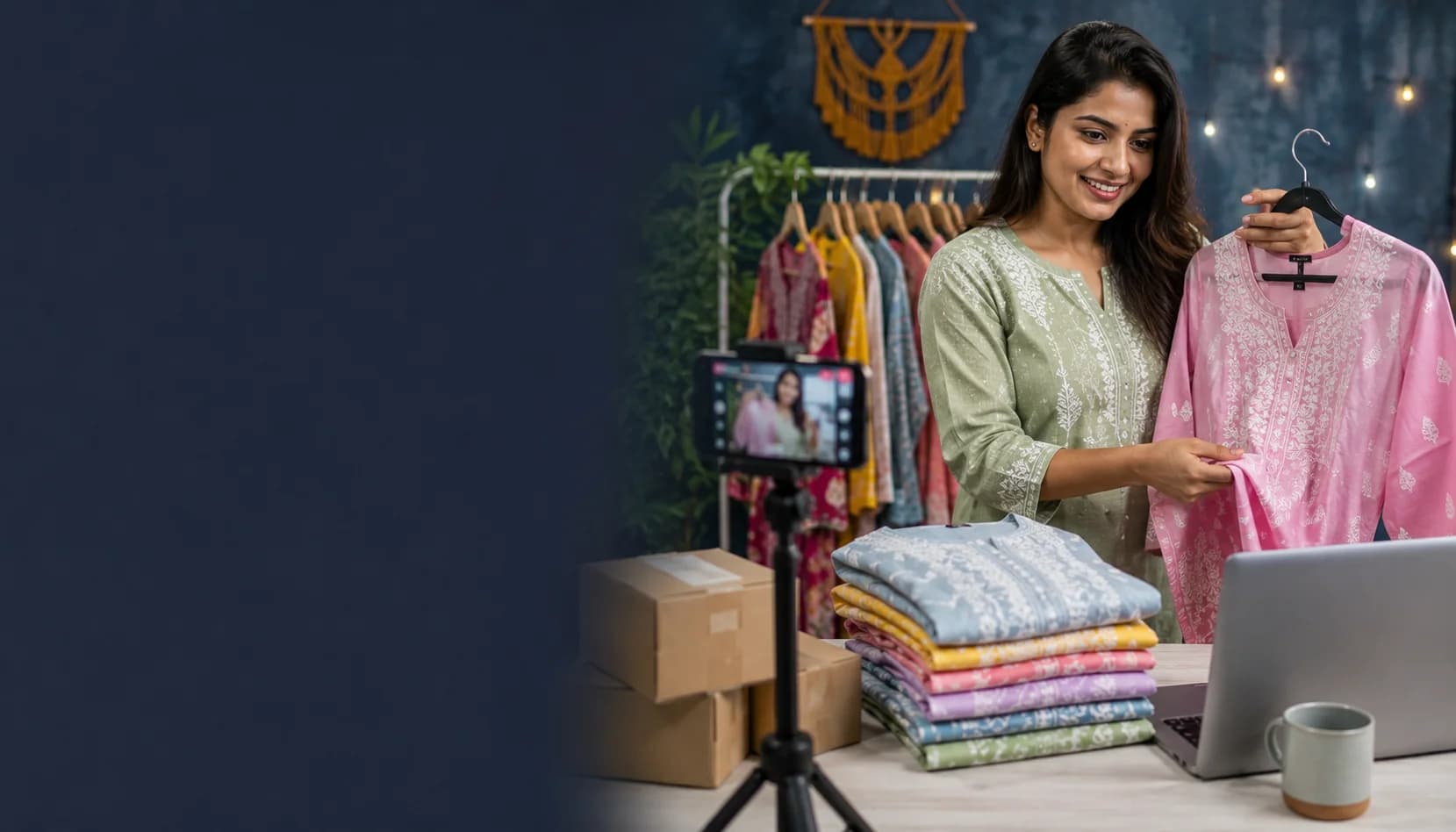
Every fashion brand's Instagram feed looks similar at first glance: styled shoots, a discount code in the bio, and the occasional influencer collaboration. Indian fashion brands digital marketing sales growth actually comes from a handful of specific practices. These practices separate labels with a genuine, repeatable sales engine from those living campaign to campaign, hoping the next discount push carries the quarter.
In our experience working with growing Indian fashion and apparel brands, the difference between steady growth and constant volatility almost always comes down to whether a brand has built real systems behind its visual content, not just pretty photography. This guide covers seven ways Indian fashion brands digital marketing actually turns into consistent sales. Our team at Digigrowvity has watched this exact approach turn seasonal, discount-dependent brands into labels with a genuinely predictable revenue base.
Indian Fashion Brands Digital Marketing Sales: Seven Wins
| # | Approach | Primary Outcome |
|---|---|---|
| 1 | Story-driven visual content | Builds brand identity beyond product photos |
| 2 | Influencer seeding over one-off collaborations | Produces authentic, ongoing brand advocacy |
| 3 | Meta and Instagram shopping integration | Reduces friction between discovery and purchase |
| 4 | WhatsApp for order updates and styling help | Builds trust that drives repeat purchases |
| 5 | User-generated content campaigns | Provides social proof that ads alone cannot |
| 6 | Retargeting cart abandoners and browsers | Recovers otherwise lost sales |
| 7 | Seasonal and festival campaign planning | Captures predictable demand spikes |
1. Story-Driven Visual Content
A product photo shows what an item looks like. Story-driven content shows why someone would want to wear it: the occasion, the feeling, the identity it represents. Indian fashion brands digital marketing sales grow fastest when content moves beyond flat product shots into genuine styling stories. This means real people, real occasions, and real settings that a prospective buyer can picture themselves in.
Brands that invest in this kind of content consistently build stronger brand recall. Those relying purely on studio product photography fall behind.
2. Influencer Seeding Over One-Off Collaborations
A single paid post from a large influencer produces a short spike and little lasting value. Seeding product to a wider range of smaller, genuinely aligned creators, without expecting a single paid post in return, produces more authentic content over time. It also builds a base of ongoing brand advocates. Indian fashion brands digital marketing sales benefit far more from this compounding approach than from occasional large, expensive one-off placements.
3. Meta and Instagram Shopping Integration
Every extra step between seeing a product and buying it loses potential customers. Properly configured Instagram and Facebook shopping tags let a browsing customer tap directly through to checkout without leaving the app. This single technical setup is often overlooked by smaller brands. It removes friction at exactly the moment purchase intent is highest.
4. WhatsApp for Order Updates and Styling Help
Fashion purchases involve real uncertainty around sizing, fit, and styling. A responsive WhatsApp channel builds the kind of trust that turns a first-time buyer into a repeat customer. It should handle order updates, sizing questions, and styling advice. Indian fashion brands digital marketing sales that treat WhatsApp purely as a broadcast channel miss this genuine relationship-building opportunity.
5. User-Generated Content Campaigns
Nothing sells a fashion product like seeing a real customer wearing it well. Encouraging and actively resharing genuine customer photos and reviews provides social proof. No amount of professional photography can fully replicate that proof. A simple hashtag campaign or a repost incentive turns satisfied customers into an ongoing content source for Indian fashion brands digital marketing.
6. Retargeting Cart Abandoners and Browsers
A significant share of fashion ecommerce visitors browse, add to cart, and leave without purchasing. Often this happens due to a passing distraction rather than genuine disinterest. Retargeting these browsers and cart abandoners with a relevant reminder, sometimes paired with a modest incentive, recovers a meaningful share of otherwise lost sales. Indian fashion brands digital marketing sales that skip this step leave real, already-interested revenue on the table.
7. Seasonal and Festival Campaign Planning
Fashion demand in India follows genuinely predictable seasonal patterns. This includes wedding season, major festivals, and end-of-season sales. Brands that plan content, inventory, and campaigns around these known peaks well in advance consistently capture more of that seasonal demand than those scrambling to react once the season has already begun.
Why These Seven Approaches Work Together
Story-driven content and influencer seeding build brand desire. Shopping integration and WhatsApp remove friction and build trust. User-generated content and retargeting recover and reinforce interest, and seasonal planning captures predictable demand spikes. Removing any single piece weakens the whole Indian fashion brands digital marketing system, which is why brands investing across all seven consistently outgrow those relying on discounts and paid ads alone.
What Fast-Growing Fashion Brands Do Differently
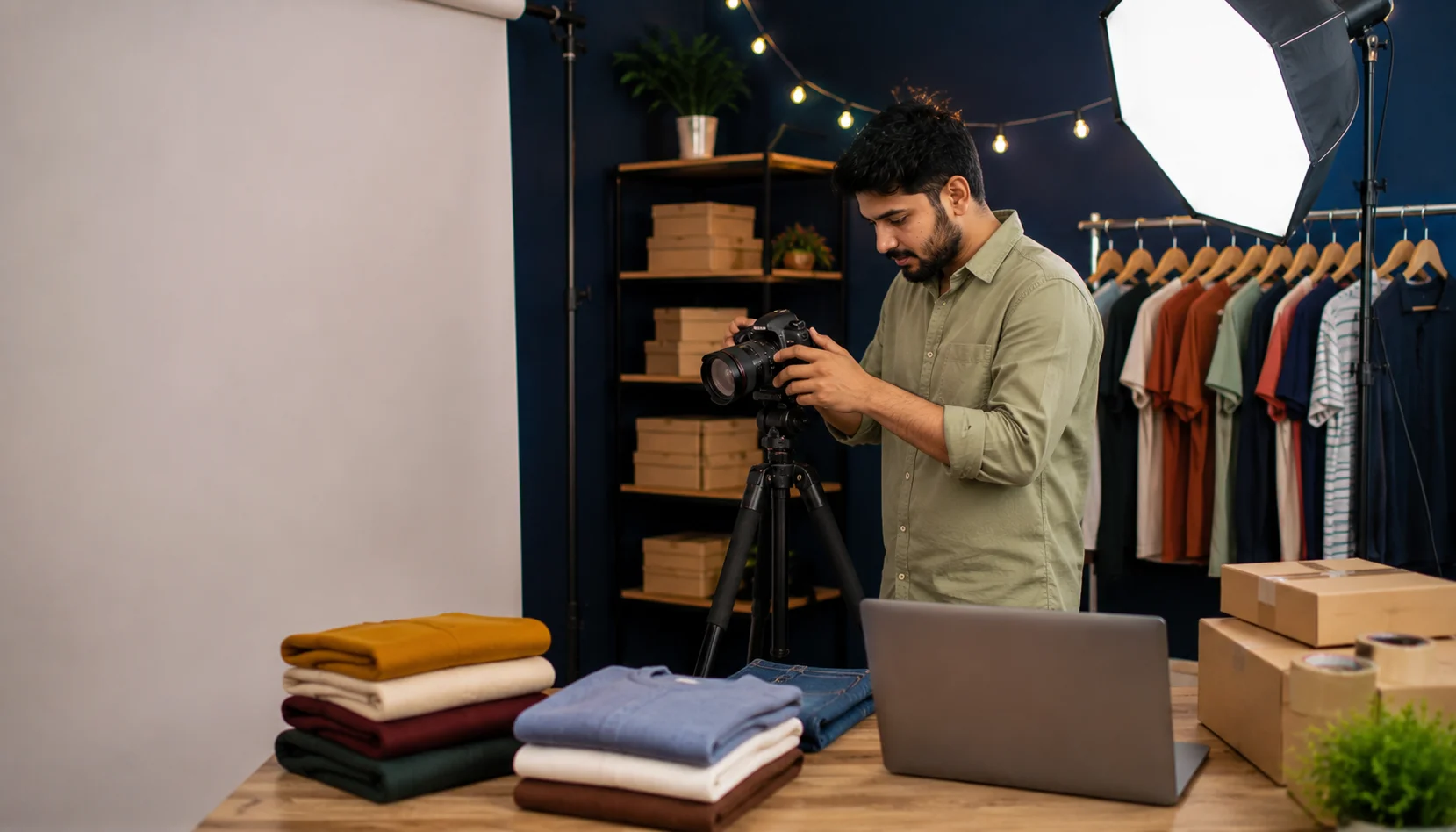
Brands building a genuinely predictable sales engine through Indian fashion brands digital marketing treat content as an ongoing operational function, not a campaign undertaken occasionally. They track which specific content and creators actually drive sales. They also respond to customer messages quickly, and plan seasonal campaigns months rather than weeks ahead.
A Realistic 90-Day Timeline
In the first month, focus on foundations. Set up Instagram and Facebook shopping tags properly, establish a WhatsApp Business presence, and begin a consistent story-driven content rhythm. In month two, launch the first influencer seeding programme and set up retargeting campaigns for site visitors. By month three, a brand following this Indian fashion brands digital marketing system typically sees measurably higher conversion from social traffic, alongside a growing base of user-generated content feeding future campaigns.
Common Mistakes That Slow Down Sales Growth
The most common mistake in Indian fashion brands digital marketing is relying on discounts as the primary growth lever. This trains customers to wait for a sale rather than buying at full price. The second mistake is treating influencer marketing as a series of disconnected one-off posts, rather than an ongoing relationship. The third is skipping retargeting entirely, losing genuinely interested browsers who simply needed a gentle reminder.
How to Measure What Is Actually Working
Track four numbers: conversion rate from social traffic, average order value by channel, repeat purchase rate, and cost per acquisition by campaign type. A brand that tracks these numbers can direct its Indian fashion brands digital marketing effort toward whichever channel is actually producing profitable sales, rather than whichever channel produces the most impressions.
A Short Example From Practice
One growing ethnic wear label applied this Indian fashion brands digital marketing approach by shifting from occasional large influencer placements to a broader seeding programme with dozens of smaller creators, combined with properly configured Instagram shopping tags. Within two months, organic content mentioning the brand had multiplied noticeably. Social-driven conversion rate improved meaningfully, since the shopping tags removed the friction that had previously been losing interested browsers before checkout.

Preparing Content Before Festival Season
The strongest festival campaigns have their content, inventory, and influencer partnerships ready well before the season actually begins. Brands that wait until the season has already started consistently see weaker results. Those who plan and produce content months in advance see far better ones.
Choosing the Right Channel Mix
Not every brand needs all seven tactics at full intensity from day one. A newer brand still building initial awareness might lean harder into influencer seeding and story-driven content. An established brand with existing traffic may get more value from shopping integration and retargeting instead, to convert the traffic it already has.
Documenting What Works for Future Campaigns
Keeping a record of which creators, content formats, and campaigns actually drove sales turns each season into a lesson for the next one. This record becomes genuinely valuable as a brand scales its Indian fashion brands digital marketing effort and content production over time.
Setting Milestones Within Each Quarter
Breaking a 90-day plan into monthly checkpoints keeps a small marketing team accountable. A realistic target might be shopping integration and WhatsApp setup complete by month one, the first influencer cohort seeded by month two, and a measurable conversion improvement by month three.
Building an Internal Playbook
As certain content formats, creator partnerships, and campaign structures prove themselves, saving them into a reusable internal playbook saves considerable effort as a brand scales into new product lines or seasons.
Common Questions From Fashion Brand Founders
Founders new to structured Indian fashion brands digital marketing often ask how much of their budget should go toward influencer seeding versus paid ads. In practice, a mix of both works best. Seeding builds longer-term organic content, while paid ads drive immediate, targeted traffic to convert that interest.
Coordinating Digital Marketing With Inventory and Fulfillment
The strongest Indian fashion brands digital marketing programmes coordinate closely with inventory planning. A campaign driving demand for a style that is out of stock wastes both marketing spend and customer goodwill. Aligning campaign timing with actual stock availability protects the return on every marketing rupee spent.
Handling Seasonal Changes in Demand
Beyond major festivals, fashion demand shifts with weather, wedding season, and back-to-school periods. Brands that adjust messaging and product focus around these known patterns capture more of the available seasonal demand. Those running flat, unchanging campaigns year-round capture noticeably less.
Scaling This Approach as a Brand Grows
As a brand builds a larger customer base and repeat purchase rate, the goal of its Indian fashion brands digital marketing shifts. It moves from pure acquisition to retention and lifetime value. At that stage, WhatsApp relationship-building and user-generated content do more of the work, while paid acquisition can narrow toward the brand's most profitable customer segments.
A Final Word Before You Begin
Indian fashion brands digital marketing sales growth does not come from chasing the next viral moment. It comes from building genuine content systems, reducing friction between discovery and purchase, and treating customer relationships as worth investing in beyond the first sale. Brands that commit to building this system properly consistently outgrow those relying on discounts and one-off campaigns alone entirely.
How This Fits Into Broader Digital Marketing
These seven tactics reflect principles that apply across visually driven ecommerce categories broadly. Build genuine brand desire through content, remove friction at the point of purchase, provide social proof, and plan for predictable demand. A brand that understands this Indian fashion brands digital marketing framework can apply it to any future product line expansion.
Measuring Return on Investment
For most fashion brands, the return on structured digital marketing shows up as a falling cost per acquisition over time and a rising repeat purchase rate. Content and relationship investments compound in ways that pure discount-driven campaigns never do. Disciplined tracking of these numbers matters far more than raw follower count or engagement rate alone.
Working With an Agency Versus Managing It In-House
Founders with design or content sensibility can manage much of this system in-house in the early stages. As a brand scales and campaign complexity grows, handing content production, influencer coordination, and paid campaign management to an agency familiar with fashion ecommerce frees founders. This lets them focus on product and merchandising, while keeping the marketing engine running consistently.
Getting Started This Quarter
Start with an honest audit of current content against what genuinely drives engagement and sales, then build out shopping integration and WhatsApp presence this system depends on. Contact us to discuss a plan built around your specific brand and target customer. This approach pairs well with the principles covered in Social Commerce India: A Complete Guide, Meesho Marketing: Grow Reseller Sales, and our ecommerce marketing services, for brands building a complete presence.
Handling Returns and Exchanges as Part of the Sales Story
Fashion has a higher return rate than most ecommerce categories, largely due to sizing uncertainty. How a brand handles this moment shapes whether a customer returns for a second purchase. A smooth, low-friction exchange process turns what could be a negative experience into a demonstration of genuine customer care. This should be clearly communicated through WhatsApp and confirmed quickly, as part of a well-run Indian fashion brands digital marketing programme. Indian fashion brands digital marketing that ignores this post-purchase moment misses a real opportunity, since a customer who has a good exchange experience often becomes more loyal than one whose first order fit perfectly the first time.
Balancing Paid Acquisition With Organic Growth
Paid advertising can accelerate reach. A brand relying entirely on paid traffic without building organic content and community remains vulnerable to rising ad costs and platform algorithm changes. The strongest Indian fashion brands digital marketing programmes use paid spend to amplify content that is already working organically, rather than as a substitute for building a genuine audience. This balance is central to sustainable Indian fashion brands digital marketing, since it protects a brand's margins as it scales and reduces dependency on any single paid channel.
Frequently Asked Questions
How is Indian fashion brands digital marketing different from general ecommerce marketing? It relies more heavily on visual storytelling, influencer relationships, and social proof, given how strongly fashion purchase decisions are driven by identity and aspiration rather than pure functional need.
Does influencer seeding really work better than paid collaborations? For most growing brands, yes, particularly for building ongoing, authentic content. Paid collaborations still have a role, but seeding produces a compounding base of organic content that paid placements alone cannot replicate.
Is WhatsApp really necessary for a fashion brand? Increasingly, yes. Sizing and styling questions are common friction points in fashion ecommerce, and a responsive WhatsApp channel meaningfully reduces returns and builds the trust that drives repeat purchases.
How far in advance should festival campaigns be planned? Ideally two to three months ahead, covering content production, influencer partnerships, and inventory planning, since brands that plan this early consistently outperform those reacting once the season has already begun.
Key Takeaways
- Indian fashion brands digital marketing sales growth requires genuine content systems, not just discounts and ads
- Influencer seeding across many smaller creators outperforms occasional large paid placements over time
- Shopping tag integration removes friction at the exact moment purchase intent is highest
- WhatsApp-based styling and order support builds the trust that drives repeat purchases
- A realistic 90-day timeline is enough to see a measurable shift in social-driven conversion
Summary
Growing an Indian fashion brand's sales through digital marketing requires story-driven content, genuine influencer relationships, low-friction shopping integration, and proactive seasonal planning, applied together as one connected system rather than relying on discounts alone.
Conclusion
Brands that commit to the seven approaches in this guide typically see a steadier, more predictable sales pattern within their first ninety days of consistent effort. For brands that want help building this system properly from the start, contact us to talk through a plan built around your specific product line and audience.
References
- World Health Organization: Consumer Behavior and Health
- Wikipedia: Fashion Industry
- Google Business Profile Help
- Ministry of Electronics and Information Technology guidance on AI adoption in India