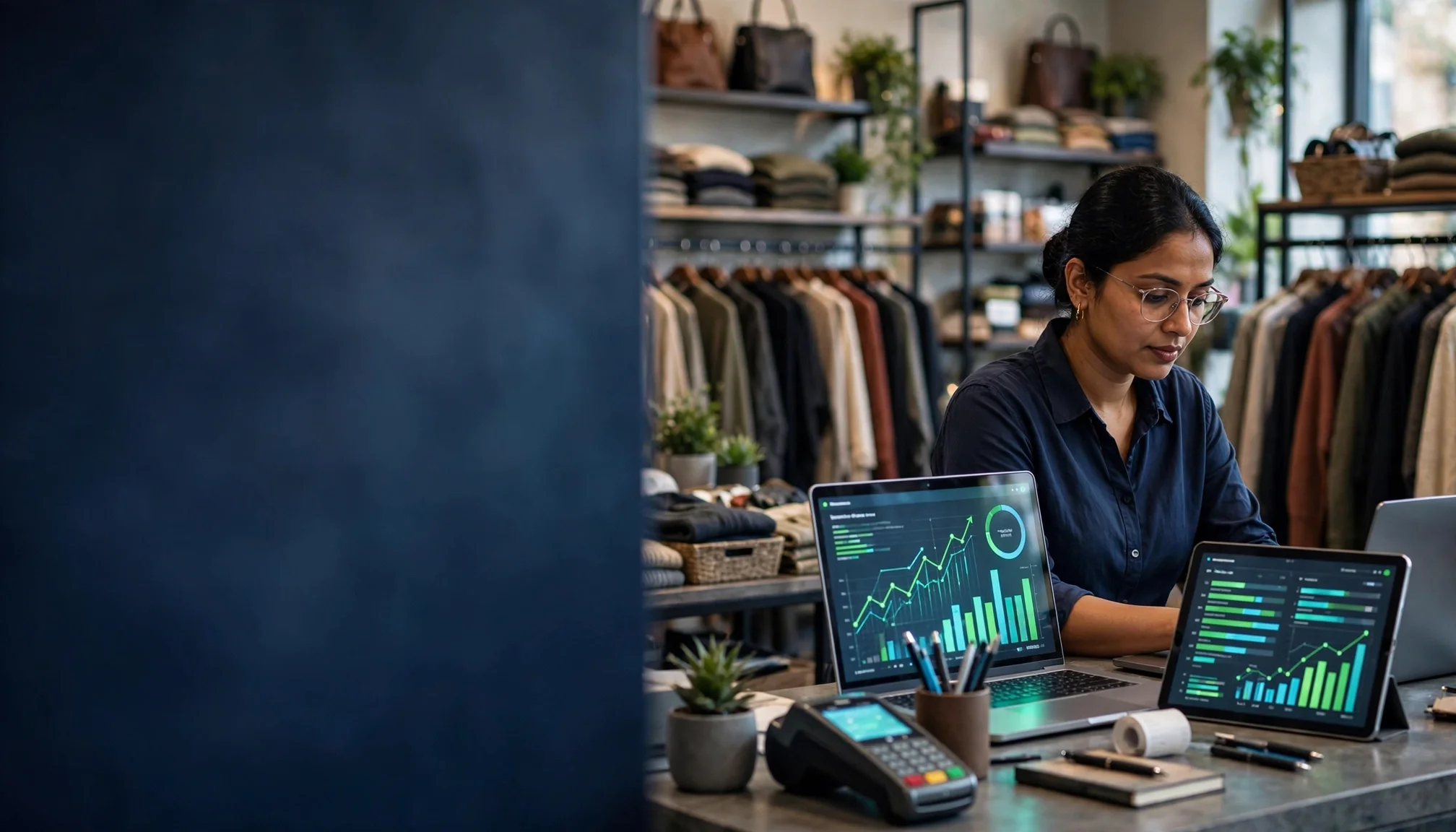
Digital marketing for retail stores works best when online visibility connects directly to what happens on the actual shop floor, not just impressive follower counts disconnected from real sales. DigiGrowvity has helped retail stores across India build exactly this kind of connected digital presence. Seven consistent practices explain why some stores stay consistently busy while others with equally good products struggle to convert online interest into footfall and sales.
This article breaks down exactly how digital marketing for retail stores works in practice. It focuses on specific, repeatable practices rather than vague advice about "building a following."
Digital Marketing for Retail Stores: Seven Wins at a Glance
| Win | What It Actually Delivers |
|---|---|
| A complete, active Google Business Profile | Visibility for the "near me" searches that drive footfall |
| Product-focused social media content | Genuine interest in specific, purchasable items |
| In-stock and new arrival announcements | Timely reasons to visit rather than generic branding |
| Local influencer and community partnerships | Reach into audiences a store could not access alone |
| Active review management | Trust signals that convert hesitant browsers into visitors |
| Click-to-directions and store locator optimization | Removing friction between decision and arrival |
| Online-to-offline promotion tracking | Understanding which digital efforts actually drive footfall |
Win 1: Building a Complete, Active Google Business Profile
Digital marketing for retail stores starts with Google Business Profile, since most local shopping searches happen through Google Maps and local search results directly. Our Google Business Profile guide covers the specific tactics for this platform in depth, applicable to any retail business beyond restaurants specifically.
A complete, accurate profile with current hours, photos, and category drives considerably more footfall than an incomplete one left unattended for months.
Win 2: Creating Product-Focused Social Media Content
Digital marketing for retail stores works most efficiently when social content showcases specific, purchasable products rather than only generic branding or lifestyle imagery. A patron scrolling through a feed decides to visit largely based on whether a specific item genuinely interests them.
Stores posting purely generic branded content miss the direct product interest that drives an actual visit far more reliably.
Win 3: Announcing New Arrivals and Restocks
Digital marketing for retail stores benefits considerably from timely new arrival and restock announcements, giving patrons a genuine, timely reason to visit rather than a vague, evergreen reminder that a store exists. This urgency drives footfall that generic branding content rarely achieves.
Stores that never announce these updates miss considerable footfall that actively communicating competitors nearby are capturing instead.
Win 4: Partnering With Local Influencers and Community Voices
Digital marketing for retail stores grows considerably through partnerships with local influencers and community voices already trusted within a specific area. These partnerships reach audiences a store's own marketing alone could not access as efficiently.
Our hyperlocal marketing guide covers this local influencer partnership approach in more tactical depth, applicable to any small business with a defined local audience.
Win 5: Managing Reviews Actively
Digital marketing for retail stores depends heavily on reviews, since a hesitant browser deciding whether a visit is worthwhile checks recent reviews before committing to the trip. Our restaurant reputation management guide covers the review generation tactics that build this trust, applicable well beyond restaurants specifically.
A store with a declining rating loses footfall considerably, since patrons comparing several nearby options choose the more trusted one.
Win 6: Optimizing Directions and Store Locator Information
Digital marketing for retail stores benefits from removing every friction point between a patron's decision and their actual arrival, clear directions, visible parking information, and accurate map pins. A confusing arrival experience costs footfall just as much as a poor initial decision to visit.
Stores that never address this friction lose patrons who decided to visit but gave up somewhere between the decision and actually walking through the door.
Win 7: Tracking Online-to-Offline Promotion Results
Digital marketing for retail stores improves considerably when a store tracks which online promotions actually drove footfall, using simple methods like asking patrons how they heard about a sale or offer. This tracking reveals which digital efforts genuinely translate into visits.
Stores skipping this tracking often continue investing in channels that generate engagement without ever confirming whether that engagement translates into actual sales.
Why These Seven Wins Work Together
None of these seven wins deliver their full value alone. A complete Google profile means little without product content giving patrons a specific reason to visit. New arrival announcements mean little without reviews reinforcing the trust to actually commit to the trip. Local partnerships work best when tracking confirms which efforts genuinely drive footfall.
Retail stores combining all seven wins consistently see stronger, more predictable footfall than those focusing on just one or two in isolation.
What Fast-Growing Retail Stores Do Differently
Stores seeing genuine footfall growth review their Google Business Profile performance, review trends, and promotion tracking monthly. Our article on what fast-growing restaurants do differently covers this same disciplined review habit, applicable to any retail business.
Stores treating their digital presence passively typically see footfall plateau as more actively managed competitors continue refining their own approach.
A Realistic 90-Day Timeline
Weeks one through three typically involve completing the Google Business Profile and auditing existing social content for product focus. Weeks four through eight focus on launching consistent new arrival announcements and building the first local partnerships.
Weeks nine through twelve introduce a structured review of footfall and promotion tracking, informing where to invest further. This sequencing produces steadier improvement than attempting every practice simultaneously.
Common Mistakes That Slow Down Results
Many retail stores post purely generic branded content, missing the specific product interest that actually drives a visit. Digital marketing for retail stores works far less effectively when content stays vague and disconnected from actual, purchasable items.
Another common mistake involves letting the Google Business Profile go stale for months, with outdated hours or missing photos. Some stores also skip promotion tracking entirely, never learning which digital efforts genuinely drive footfall.
How to Measure What Is Actually Working
Track Google Business Profile views, social engagement on product-specific content, and footfall traced back to specific promotions monthly. These numbers together reveal exactly where the digital presence needs attention. Comparing performance against nearby competitor stores also helps understand whether improvements keep pace with the local market.
A Short Example From Practice
One retail store DigiGrowvity worked with had a large social media following but posted purely generic branded content, seeing engagement without any corresponding footfall increase. After shifting to product-focused content, active new arrival announcements, and simple promotion tracking, footfall grew considerably within a single quarter.
This improvement came from connecting content directly to purchasable products, not from growing the audience further. Digital marketing for retail stores works best when content gives patrons a specific, timely reason to actually visit.
Preparing Staff Before Footfall Increases
Digital marketing for retail stores drives visits quickly enough that an unprepared team can become the actual bottleneck. A clear process for handling increased foot traffic and enquiries should exist before actively pursuing footfall growth.
Stores that skip this preparation often see a properly optimised digital presence undermined by slow service during the exact weeks when footfall finally starts increasing.
Choosing the Right Products to Feature
Not every product deserves equal marketing investment. Digital marketing for retail stores works most efficiently when featured products match genuine current demand and seasonal relevance, rather than showcasing inventory indiscriminately.
A featured product matching genuine patron interest drives footfall efficiently. A randomly chosen product can generate engagement without translating into an actual visit or sale.
Documenting What Works for Future Reference
Record which content, promotions, and partnerships produced the strongest footfall results. This documentation matters as staff change roles over time. A simple shared document, updated quarterly, becomes increasingly useful.
This record helps a store avoid repeating approaches that already underperformed for this specific location and customer base.
Setting Milestones Within Each Quarter
Set interim milestones rather than waiting until quarter's end to check progress. Complete the profile and content audit by week two. Launch new arrival announcements by week six. Review footfall tracking by week ten.
These checkpoints make it easier to notice a stalled effort early, rather than discovering the problem only after a full quarter has passed.
Building an Internal Playbook
Someone should own the digital marketing process directly. A simple playbook listing who manages the Google profile, who posts product content, and who tracks footfall keeps standards steady even as staff change.
This playbook should note which specific products and promotions have worked best for this particular store. The ideal approach genuinely varies by product category and neighborhood.
Common Questions From Retail Store Owners
Owners often ask whether ecommerce digital marketing tactics apply equally well to a physical retail store. The honest answer is that many principles transfer, but a physical store's digital marketing must specifically drive footfall, not just online clicks, making local visibility and arrival friction considerably more important.
Digital marketing for retail stores works best when owners recognize this distinction, prioritizing local search, reviews, and footfall tracking over broad, generic ecommerce tactics.
Coordinating Digital Marketing With In-Store Operations
Digital marketing for retail stores works most smoothly when online promotion connects to actual in-store readiness. A new arrival announced online means little if the item is not actually visible and available when a patron arrives.
Someone should oversee this coordination directly, ensuring digital marketing promises match what the shop floor can genuinely deliver at any given moment.
Handling Seasonal Changes in Retail Demand
Many retail stores see demand shift seasonally, tied to festivals, weather, or shopping cycles specific to their product category. Digital marketing for retail stores works more consistently when promotional content stays in sync with these genuine seasonal patterns.
A mismatch between promoted content and actual seasonal relevance wastes marketing effort on moments patrons are not genuinely ready to shop.
Scaling This Approach as a Business Grows
What works for a single store needs adjustment as a retail business expands to several locations. A shared playbook and content approach still apply broadly. Someone dedicated to monitoring footfall and promotions across every branch becomes necessary at a certain size.
Plan for this scaling early. Waiting until inconsistency becomes visible across several branches causes real disruption later. This growth continues over successive years and quarters as the business expands into new neighbourhoods and cities.
A retail group that documents its approach early saves considerable confusion later. New managers need to understand exactly how digital marketing for retail stores works across every location, without relying on scattered, informal knowledge passed down inconsistently over time.
A Final Word Before You Begin
Digital marketing for retail stores pays off reliably once the underlying discipline, complete profiles, product content, timely announcements, partnerships, reviews, frictionless directions, and tracking, becomes routine rather than occasional. The seven wins in this article, applied together, build a genuinely durable footfall channel.
How This Fits Into Broader Digital Marketing
Digital marketing for retail stores connects to the broader digital marketing practices covered throughout our other guides, from local SEO to reputation management to hyperlocal targeting. Our digital marketing for local businesses guide covers the underlying local visibility strategy this profession depends on heavily.
Digital marketing efforts reinforce each other this way, rather than functioning as isolated, disconnected tactics across different channels.
Measuring Return on Investment
Digital marketing for retail stores costs relatively little compared to traditional advertising, which makes tracking actual return straightforward. Compare time and modest ad spend invested against actual footfall and sales growth traced back to specific efforts over several months.
This ROI compounds over time, since a strong local reputation and consistent presence keep producing footfall long after the initial setup investment was made.
Working With an Agency Versus Managing It In-House
Some retail stores manage their digital marketing internally using existing staff. This works fine for a single location with modest complexity. Larger retail businesses typically benefit more from a dedicated agency partnership managing consistency across every store and channel.
An agency familiar with retail store marketing can manage profiles, content, and footfall tracking more efficiently than stretched internal staff juggling other responsibilities.
Getting Started This Month
Complete your Google Business Profile this week. Shift your social content toward specific, purchasable products. Launch a simple footfall tracking process before pursuing other partnerships.
Review footfall honestly after the first month. Digital marketing for retail stores works most reliably when stores stay consistent rather than expecting overnight results.
Balancing Digital Promotion With Genuine In-Store Experience
Digital marketing for retail stores ultimately amplifies a genuine in-store experience rather than substituting for one. A store with disorganized displays or unhelpful staff will not sustain strong footfall for long, since patrons quickly notice the gap between the polished online presentation and the actual visit.
This means digital efforts work best paired with genuine attention to the physical shopping experience, since the two reinforce each other consistently over time.
Frequently Asked Questions
How quickly does digital marketing for retail stores show results? Profile and content improvements can show results within a few weeks. Partnership and reputation-driven footfall improvements typically take one to two months to meaningfully shift visit volume.
Does a retail store need a large social media following to succeed? Not necessarily. A smaller, genuinely local following that actually visits matters more than raw follower count without local relevance.
What is the single biggest mistake retail stores make with digital marketing? Posting generic branded content without any specific, purchasable product focus, missing the direct interest that actually drives footfall and sales.
How does digigrowvity help retail stores with digital marketing? DigiGrowvity completes and actively manages Google Business Profiles, builds product-focused content, and establishes the tracking that connects digital efforts directly to actual footfall.
Key Takeaways
- A complete, actively managed Google Business Profile drives most local footfall
- Product-focused content gives patrons a specific reason to visit, not just generic branding
- Timely new arrival announcements drive urgency that evergreen branding cannot replicate
- Active review management builds the trust needed to convert browsers into visitors
- Tracking online-to-offline results reveals which digital efforts genuinely drive footfall
Summary
Digital marketing for retail stores works most effectively when the seven wins covered here, profiles, product content, announcements, partnerships, reviews, directions, and tracking, work together as one deliberate system.
Conclusion
Digital marketing for retail stores rewards active, ongoing management far more than a social presence disconnected from what happens on the actual shop floor. Stores that invest in all seven wins together tend to see steadier, more predictable footfall than those treating their digital presence passively.
Our team at DigiGrowvity has built exactly this kind of connected marketing system for retail stores across India. Contact us to discuss how these seven wins could apply to your specific store, or read our digital marketing for local businesses guide for a broader look at local visibility strategy.
References
- World Health Organization
- Wikipedia: Retail
- Google Business Profile Help
- Ministry of Electronics and Information Technology guidance on AI adoption in India