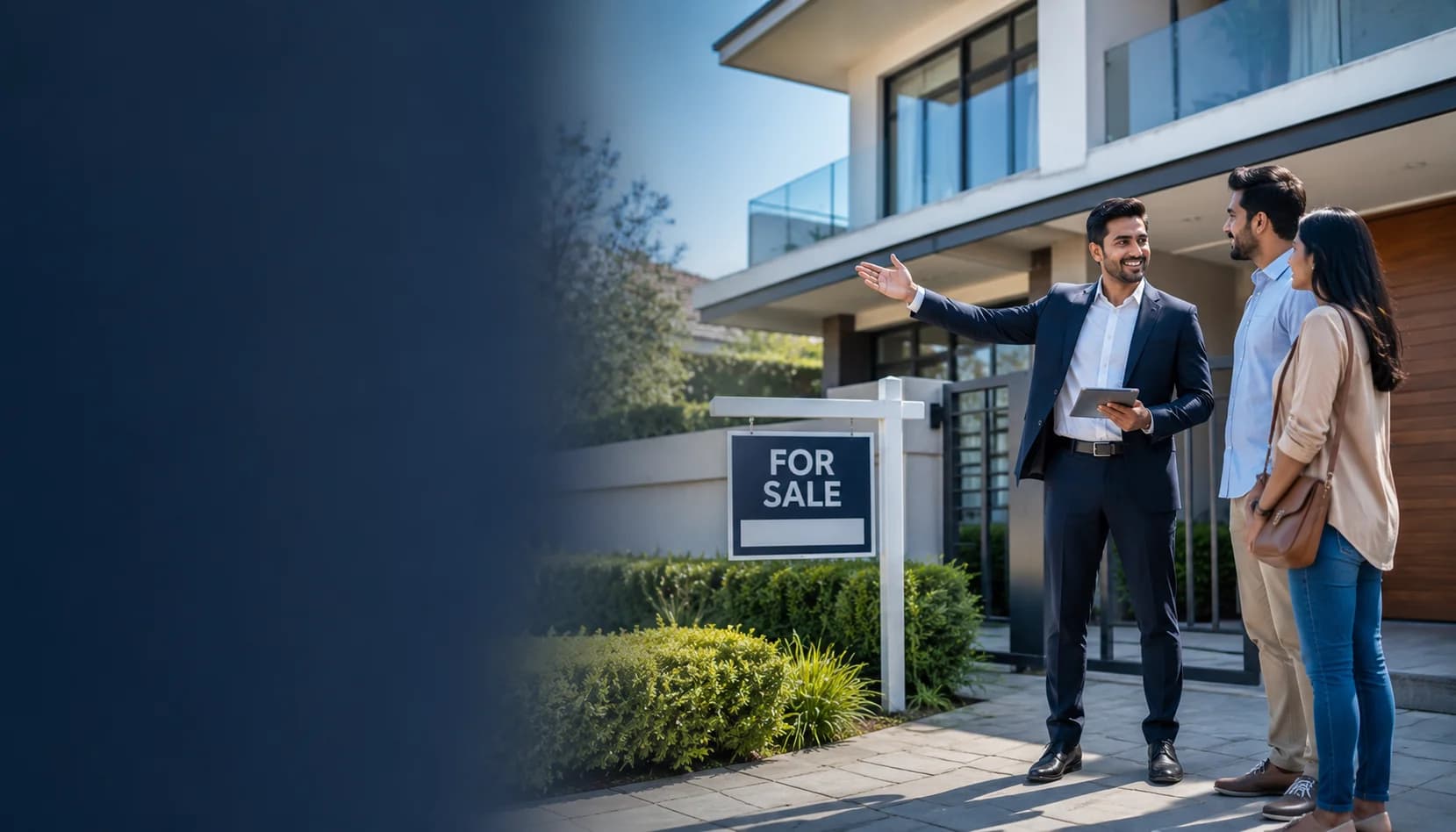
Property buyers now do most of their research long before they ever call a builder's office. Builder marketing has to meet that research head-on. It means capturing genuine buyer intent, showing the project convincingly online, and converting interest into an actual scheduled site visit. This guide covers what that looks like in practice, across the full buyer journey from first search to signed booking.
What Is Builder Marketing?
Builder marketing is the lead generation system real estate developers use to turn online property research into qualified enquiries and scheduled site visits. It combines high-intent search advertising, project showcase content that lets a buyer evaluate a property remotely, and fast follow-up that converts interest before a buyer moves on to a competing project. Unlike most local business marketing, builder marketing has to sustain a buyer's interest across a genuinely long consideration cycle. A property purchase decision rarely happens in a single visit or a single week.
Why Builder Marketing Matters Now
Property buyers increasingly begin their search online rather than by visiting a sales office directly. They research projects, compare locations, and shortlist builders well before ever making contact. That shift means a builder's digital presence, not just their physical sales office, is often what determines which shortlist a buyer even considers. Builder marketing that treats the website and ad campaigns as an afterthought loses buyers to competitors. Those competitors show up clearly at the exact moment someone is actively searching.
According to Google's guidance on local business visibility, a complete, actively managed presence remains one of the strongest available trust signals. For a purchase as significant as property, that trust signal matters even more than it does in most other categories.
Google Ads for High-Intent Property Search
Property search intent is often extremely specific, and builder marketing that matches that specificity converts far better than broad brand campaigns. Searches like "3 BHK flats near [location]," "new residential project [city]," or "plots for sale [area]" represent someone actively evaluating real options.
- Location-specific ad copy consistently outperforms generic project-name campaigns, since buyers usually search by area before they search by builder name
- Configuration-specific targeting, matching ad copy to the exact unit type a buyer is searching for, filters out unqualified clicks before they cost you budget
- Retargeting buyers who visited a project page but didn't enquire captures interest that would otherwise be lost to a competing project shown later that same day
Project Showcase Content and Virtual Tours
A property purchase is one of the largest financial decisions most buyers make. Buyers increasingly expect to evaluate a project thoroughly online before committing time to an in-person visit. Detailed project pages, high-quality photography, floor plans, and virtual walkthrough tours let a serious buyer do real due diligence remotely. This builds confidence before the first site visit, rather than leaving all of that evaluation to happen on-site.
This matters most for out-of-town and NRI buyers. They often can't visit a project in person until they're already fairly convinced. Builder marketing that only shows a handful of exterior renders, without genuine interior detail or a walkthrough, asks these buyers to commit to travel on far less information than they'd want for a purchase this significant.
WhatsApp for Site Visit Scheduling
An enquiry that goes unanswered for a day often means a buyer has already scheduled a visit to a competing project instead. Automating an immediate response keeps a buyer engaged during exactly the window when their interest is highest. This means confirming receipt, sharing project details or a brochure, and offering a direct site visit scheduling link. Given how much of Indian property research and communication already happens over WhatsApp, this channel often converts enquiries into scheduled visits faster than email or a callback ever could.
RERA Compliance in Builder Marketing
Real estate advertising in India operates under the Real Estate (Regulation and Development) Act. Builder marketing needs to work within those requirements, not around them. RERA governs what can be advertised before a project's registration is complete. It also requires the RERA registration number to be displayed in marketing materials, and restricts misleading claims about possession dates, amenities, or carpet area.
Practically, that means:
- Displaying the RERA registration number clearly in ads, landing pages, and brochures for any registered project
- Avoiding possession date or amenity claims that aren't consistent with the RERA-filed project details
- Making sure sales team scripts and landing page copy match what's actually filed, not an aspirational version of the project
Builder marketing that gets ahead of its RERA filing, or advertises amenities and dates inconsistent with it, creates real regulatory and reputational risk. That risk undermines the trust the rest of the marketing programme is trying to build.
Marketing to Channel Partners and Brokers
Direct-to-buyer marketing is only half the picture for most builders. Channel partners and brokers still originate a meaningful share of property enquiries, particularly for larger or higher-value projects. Builder marketing that ignores this side of the funnel leaves real volume on the table. A simple, well-maintained broker portal with current project information, commission structure, and marketing collateral makes it easier for partners to actively push a project, rather than defaulting to competitors with better-organized broker support.
Marketing Across Project Stages
A project's marketing needs change significantly across its lifecycle. Builder marketing that runs the same campaign from launch to final possession usually underperforms marketing tailored to each stage.
At pre-launch, the goal is building a qualified interest list before pricing and inventory are even finalized. This often happens through early-bird offers and content that builds anticipation. At launch, urgency and scarcity messaging genuinely apply, since early inventory often does move fastest, and marketing can lean into that honestly. Mid-construction, the message shifts toward construction progress updates and trust-building, reassuring buyers who are watching an investment take shape over months. Near possession, marketing should shift again toward the practical. This means remaining unit availability, possession timelines, and the final push for buyers who've been considering the project for a while.
Treating all of these stages identically, usually defaulting to constant urgency messaging throughout, tends to wear thin with buyers who are watching the same project for months. They can tell when "limited units remaining" has been true for the entire construction period.
NRI Buyer Marketing for Real Estate
NRI buyers represent a significant share of demand for many Indian real estate projects. Marketing to this audience requires real adjustments beyond just running the same ads with an international targeting radius. NRI buyers can't easily visit for an in-person site visit before deciding. This makes detailed project content and virtual tours even more important than they are for domestic buyers.
They also have specific, recurring questions that domestic buyers usually don't. These include how property purchase works for NRIs under India's foreign exchange regulations, what documentation is required, how payments are typically structured across international bank transfers, and how property management works for an owner who won't be living in the country. Builder marketing that proactively addresses these questions, rather than making an NRI buyer dig for answers or ask an unfamiliar sales team, converts meaningfully better with this audience.
Time zone-aware scheduling for video consultations and virtual tours matters too. An NRI buyer in the UAE, UK, or USA is often trying to fit a serious financial decision into hours that don't overlap neatly with a typical Indian sales office's working day.
Common Mistakes in Builder Marketing
A few patterns show up repeatedly when auditing a developer's existing marketing:
- Generic project ads with no location or configuration specificity, attracting broad but unqualified interest
- Project pages with a handful of exterior renders and no genuine interior detail or virtual tour, asking buyers to travel on too little information
- Enquiries going unanswered for hours or days, losing buyers to faster-moving competing projects
- Marketing claims inconsistent with actual RERA filings, creating compliance risk alongside lost trust
Our team's general recommendation is to fix response time and RERA consistency first. Both protect the value of every rupee spent on the rest of the programme.
Channels at a Glance
| Channel | Best For | Notes |
|---|---|---|
| Google Ads | High-intent, location-specific property searches | Retarget project-page visitors who didn't enquire |
| Project Showcase Content | Remote due diligence before a site visit | Virtual tours matter most for NRI and out-of-town buyers |
| WhatsApp Automation | Fast site visit scheduling | Often converts faster than phone or email follow-up |
| Meta Advertising | Broader project awareness and retargeting | Strong for visual project storytelling |
| Broker Portal | Channel partner enablement | Keeps partners actively selling instead of defaulting elsewhere |
A Realistic First 90 Days
Weeks 1 to 2: Set up WhatsApp automation for instant enquiry response, and audit your project pages for the level of visual detail a serious buyer actually needs.
Weeks 3 to 6: Launch location and configuration-specific Google Ads campaigns, and begin retargeting visitors who viewed a project page without enquiring.
Weeks 7 to 12: Build out a proper broker portal if you haven't already, and add virtual tour content for your highest-priority projects.
By the end of 90 days, a working builder marketing programme should show faster enquiry response and higher-quality project page content. It should also show a measurable increase in scheduled site visits relative to raw enquiry volume.
How to Measure ROI in Builder Marketing
Scheduled site visits, not raw enquiries, are the number that actually matters in builder marketing. A large volume of unqualified enquiries that never convert to an actual visit isn't producing real pipeline, no matter how strong the campaign's reported click-through and enquiry numbers look in isolation. Track cost per scheduled visit by channel, and separately track visit-to-booking conversion. A channel producing lots of visits that rarely convert to bookings may need a different qualification approach upstream, not more volume.
Response time is worth tracking on its own too. It directly affects whether a warm enquiry actually becomes a scheduled visit before a buyer commits elsewhere.
Building Trust Through Construction Progress Content
Buyers who've committed to a booking but are waiting through months of construction represent an audience most builder marketing programmes underinvest in. They focus almost entirely on new-lead acquisition instead. Regular, genuine construction progress updates, real photos and short videos of actual work happening, reassure existing buyers that their investment is progressing as promised. This content also does double duty as credibility-building material for prospective buyers evaluating whether to trust a builder with a multi-year commitment.
Builders who publish this kind of content consistently, rather than only at major milestones, tend to see stronger referral activity from existing buyers. A buyer who feels genuinely informed throughout construction is a more confident advocate than one who only hears from the builder when there's something to sell.
Getting Started
If your builder marketing currently means a handful of exterior renders and a contact form that goes unanswered for days, the fastest wins are usually fixing response time and building out genuinely detailed project content. See our digital marketing pricing page for how DigiGrowvity structures engagements, our services overview for the full channel list, industries we serve for how this adapts across sectors, or our case studies for real engagement breakdowns. You can also get in touch for a free audit of your current setup.
Key Takeaways
- Builder marketing has to sustain buyer interest across a genuinely long consideration cycle, not just capture a single click.
- Location and configuration-specific Google Ads consistently outperform generic project-name campaigns.
- Detailed project content and virtual tours matter most for NRI and out-of-town buyers who can't easily visit in person early on.
- RERA compliance isn't optional. Marketing claims need to match what's actually filed for the project.
- Scheduled site visits, not raw enquiry volume, are the metric that reflects whether builder marketing is actually working.
Conclusion
Builder marketing works when it treats the buyer's online research phase as seriously as the in-person site visit itself. Detailed project content builds the confidence that gets a buyer to schedule a visit in the first place. Fast, WhatsApp-driven follow-up keeps that interest from going cold while a competing project waits in the wings. RERA-consistent marketing protects the trust the rest of the programme depends on. Developers who build this as one connected system convert more of their traffic into actual bookings than those relying on renders and a slow-to-respond sales office alone.
Frequently Asked Questions
It has to sustain buyer interest across a much longer consideration cycle, since a property purchase decision rarely happens in a single visit. Content and follow-up systems need to be built for that extended timeline, rather than a single-touch conversion.