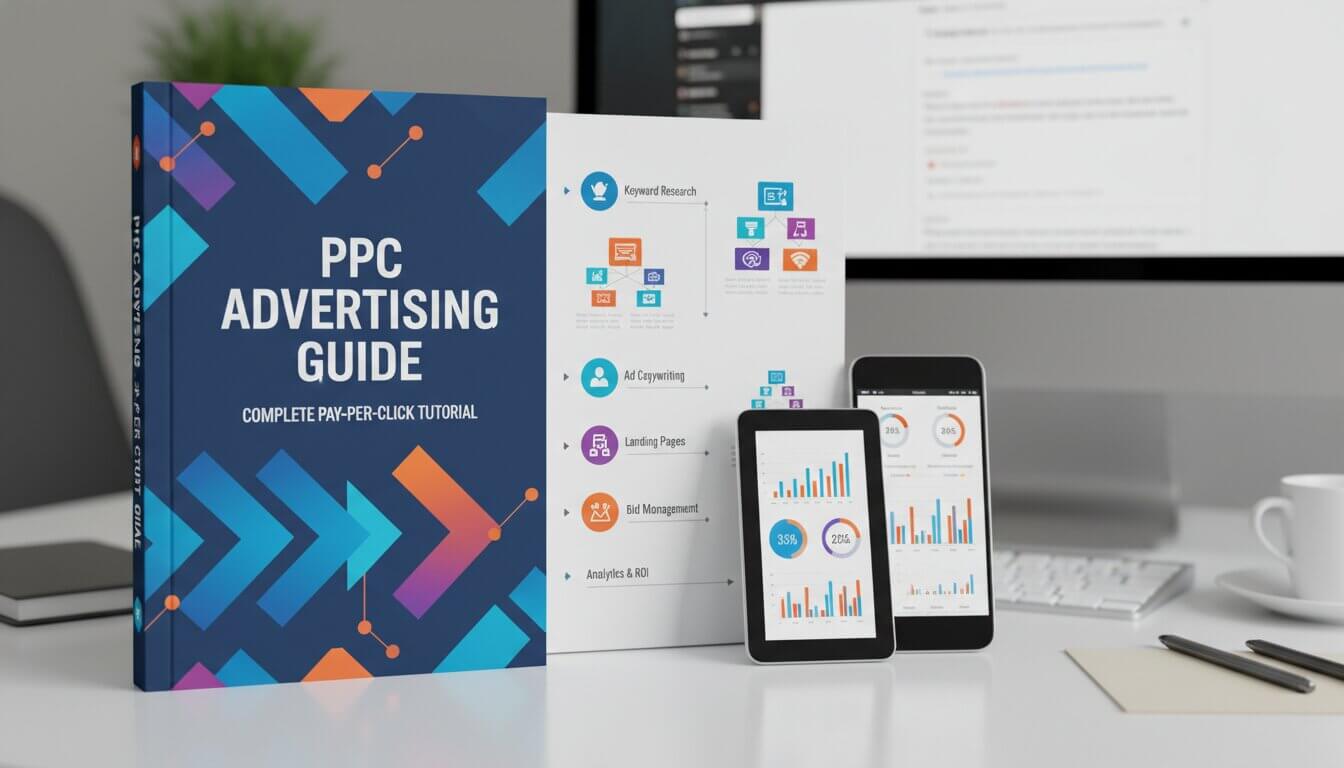
PPC Advertising Guide | Complete Pay-Per-Click Tutorial

Leo Daniel Raja

20 04 2026 2 DIGIGROWVITY Digital Growth without Limits PPC Advertising Guide | Complete Pay-Per-Click Tutorial Analytics & Reporting PPC advertising guide

What is PPC Advertising and How Does It Work?

PPC Advertising Guide : Pay-per-click advertising is a digital marketing model where you pay a fee each time someone clicks on your ad. Rather than earning traffic organically, PPC allows you to buy visits to your website from the most relevant audiences. Google Ads (the largest PPC platform), Meta Ads, LinkedIn Ads, and other platforms operate auction-based systems where advertisers bid on keywords, audiences, and placements to display their ads to target users.

PPC advertising guide delivers immediate visibility — unlike SEO which takes months to build, PPC campaigns can generate traffic and leads from the day they launch. This makes PPC essential for new businesses, product launches, time-sensitive promotions, and any situation where immediate results are needed. The trade-off is ongoing cost, which makes efficient campaign management critical for profitability.

PPC Advertising Guide - Google Ads: Search, Shopping, Display, and YouTube

Google Ads is the dominant PPC platform, offering multiple campaign types for different objectives. Search campaigns show text ads in Google search results when users type relevant queries. Shopping campaigns display product images, prices, and ratings for e-commerce businesses. Display campaigns place visual banner ads across Google’s network of over 2 million websites. YouTube campaigns deliver video ads to targeted audiences. Performance Max campaigns use AI to optimise across all Google channels simultaneously.

Effective Google Ads management requires keyword research and match type strategy (broad, phrase, exact), compelling ad copy with strong calls-to-action, landing page relevance and conversion optimisation, bid strategy selection (manual CPC, Target CPA, Target ROAS, Maximise Conversions), audience layering and remarketing, and negative keyword management to prevent wasted spend on irrelevant queries.

Meta Ads: Facebook and Instagram Advertising

Meta’s advertising platform reaches over 400 million users in India across Facebook and Instagram. Unlike Google Ads which targets search intent, Meta Ads target users based on demographics, interests, behaviours, and lookalike audiences. This makes Meta ideal for awareness building, product discovery, and demand creation — reaching potential customers before they actively search.

Meta’s campaign structure uses three levels: Campaign (objective), Ad Set (targeting and budget), and Ad (creative and copy). Effective Meta advertising requires creative testing (the single biggest performance lever), audience testing and expansion, funnel-based campaign structure (awareness, consideration, conversion), dynamic product ads for e-commerce, and lead generation forms for B2B and service businesses.

LinkedIn Ads for B2B Marketing

LinkedIn advertising is the most effective paid channel for reaching B2B decision-makers. While CPCs are higher than other platforms, the targeting precision — job title, company size, industry, seniority, skills — delivers superior lead quality for B2B businesses. Sponsored Content, Message Ads, Conversation Ads, and Lead Gen Forms each serve different B2B marketing objectives.

PPC Campaign Structure and Best Practices

Well-structured PPC accounts perform better and are easier to optimise. Best practices include organising campaigns by product, service, or objective, creating tightly themed ad groups with closely related keywords, writing multiple ad variations for testing, aligning landing pages to ad messaging for quality score improvement, implementing conversion tracking before launching, setting up remarketing audiences from day one, and reviewing search terms regularly to add negative keywords.

PPC Budgeting and ROI Measurement

PPC budgeting should be tied to business targets. Calculate your target cost per acquisition, multiply by your monthly lead or customer target, and allocate budget accordingly. Start with a test budget to gather data, then scale spend into profitable campaigns while pulling back from underperforming ones.

Key PPC metrics include click-through rate (CTR), cost per click (CPC), conversion rate, cost per acquisition (CPA), return on ad spend (ROAS), impression share, and quality score. Monthly reporting should track these metrics by campaign, ad group, and keyword level to identify optimisation opportunities. The goal is continuous improvement in efficiency — more conversions at lower cost over time.

Faq’s

Commonly asked questions

By offering concise and informative responses, this section helps users find solutions without the need to contact customer support, saving time

PPC costs vary dramatically by industry, keyword, and platform. Average CPCs in India range from INR 10-50 for low-competition keywords to INR 200-500+ for competitive terms. Monthly budgets can start from INR 30,000 for local campaigns to INR 5,00,000+ for competitive national campaigns. The key metric is not cost but ROI — a high-CPC campaign that delivers profitable conversions is better than a cheap campaign that generates no results.

They serve different purposes and are most effective when used together. Google Ads captures existing demand — people actively searching for what you offer. Facebook/Instagram Ads create demand — reaching potential customers before they search. For immediate lead generation, Google Search is usually the starting point. For brand awareness and audience building, Meta Ads are typically more cost-effective.

Average CTRs vary by platform and industry. Google Search Ads typically achieve 3-6% CTR. Display ads average 0.5-1%. Facebook ads average 1-2%. LinkedIn ads average 0.5-1%. However, top-performing campaigns significantly exceed these benchmarks. Low CTR usually indicates targeting or ad copy issues that need attention.

PPC delivers traffic from day one. However, campaigns need two to four weeks of data to optimise effectively. Initial results improve significantly during the first 30-60 days as you gather conversion data, test ad variations, and refine targeting. Mature campaigns continue improving through ongoing optimisation, typically reaching peak efficiency at three to six months.

Get Your Free PPC Audit

Ready to launch or optimise PPC campaigns that deliver measurable ROI? Get a free PPC audit with specific recommendations.

Share this post

Leave a Reply