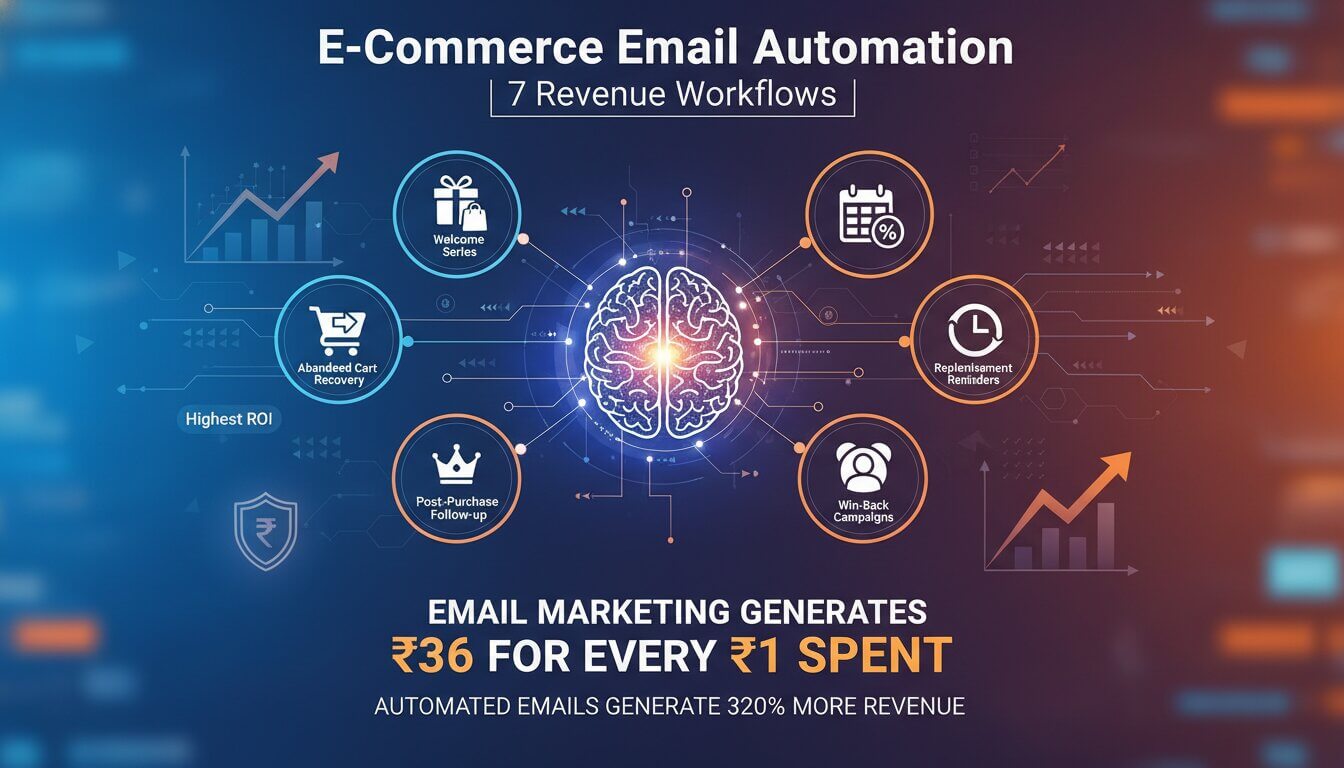
Email marketing generates ₹36 for every ₹1 spent — the highest ROI of any digital channel. For e-commerce businesses, automated email workflows are even more powerful because they trigger at the exact moment a customer takes a specific action, delivering the right message at the right time without manual effort. Automated emails generate 320% more revenue than non-automated emails because they are contextual, timely, and personalised.
Once set up, these workflows run 24/7, nurturing leads, recovering abandoned carts, driving repeat purchases, and reactivating dormant customers. The initial setup effort pays dividends for months and years as the workflows continuously generate revenue.
Workflow 1: Welcome Series (New Subscriber)
Trigger: When someone subscribes to your email list or creates an account. Send 3-5 emails over 7-10 days. Email 1 (immediate): Welcome message, brand story, and any promised discount code. Email 2 (day 2): Introduce your best-selling products and unique value proposition. Email 3 (day 4): Share customer testimonials and social proof. Email 4 (day 7): Feature a product recommendation based on their browsing or stated interests. Email 5 (day 10): Last-chance reminder for welcome discount.
Workflow 2: Abandoned Cart Recovery
Trigger: Customer adds products to cart but does not complete purchase. This is the highest-revenue automated workflow for most stores. Email 1 (1 hour after abandonment): Reminder with cart contents and product images. Email 2 (24 hours): Address common objections — highlight free shipping, easy returns, and customer reviews. Email 3 (48-72 hours): Create urgency with a limited-time discount (5-10% off). Average recovery rate is 10-15% of abandoned carts, making this workflow extremely valuable.
Workflow 3: Post-Purchase Follow-Up
Trigger: Customer completes a purchase. Email 1 (immediately): Order confirmation with expected delivery date and tracking information. Email 2 (delivery day): Product care tips, usage guides, or setup instructions. Email 3 (7 days post-delivery): Request product review with direct link. Email 4 (14 days): Cross-sell complementary products based on purchase. This workflow builds loyalty, generates reviews, and drives repeat purchases.
Workflow 4: Browse Abandonment
Trigger: Customer views products but does not add to cart. Email 1 (2-4 hours): Show the viewed products with social proof (ratings, reviews, popularity indicators). Email 2 (24 hours): Recommend similar products they might prefer. This workflow captures intent from shoppers who showed interest but were not ready to commit, nudging them back with relevant reminders and alternatives.
Workflow 5: Win-Back Campaign
Trigger: Customer has not purchased or engaged in 60-90 days. Email 1 (60 days): ‘We miss you’ message with new arrivals or best sellers since their last visit. Email 2 (75 days): Exclusive returning customer discount. Email 3 (90 days): Final attempt with strongest offer. If no engagement, move to a reduced-frequency list to avoid damaging sender reputation.
Workflow 6: Replenishment Reminders
Trigger: Timed based on average product consumption cycle. Ideal for consumable products — skincare, supplements, food, pet supplies, cleaning products. Send a reminder when the customer is likely running low, making reordering effortless. Include a direct reorder link and optionally offer a subscription discount. This workflow dramatically increases customer lifetime value for consumable product businesses.
The algorithms that determine product visibility on marketplaces differ significantly from search engine algorithms, requiring specialised expertise.
Workflow 7: VIP and Loyalty Rewards
Trigger: Customer reaches a spending threshold or purchase frequency milestone. Reward your best customers with early access to new products, exclusive discounts, birthday offers, and VIP-only sales. The top 10% of customers typically generate 40% of revenue — automated VIP workflows ensure these valuable customers feel appreciated and continue purchasing.
Faqu2019s
Commonly asked questions
By offering concise and informative responses, this section helps users find solutions without the need to contact customer support, saving time
Klaviyo is the gold standard for e-commerce email automation with deep Shopify and WooCommerce integrations. Omnisend and Mailchimp also offer strong e-commerce features. Choose based on your platform, budget, and automation complexity needs.
Most workflows should include 2-5 emails. Welcome series: 3-5 emails. Abandoned cart: 3 emails. Post-purchase: 3-4 emails. Win-back: 3 emails. More emails are not always better — test and optimize based on engagement and unsubscribe rates.
The average abandoned cart recovery rate through email is 5-10%. Well-optimized workflows with strong subject lines, product images, social proof, and incentives achieve 10-15%. Top performers reach 15-20% recovery rates.
Set Up Email Automation
Want to set up revenue-generating email automation for your online store? Our email marketing team builds and optimises high-converting automated workflows.