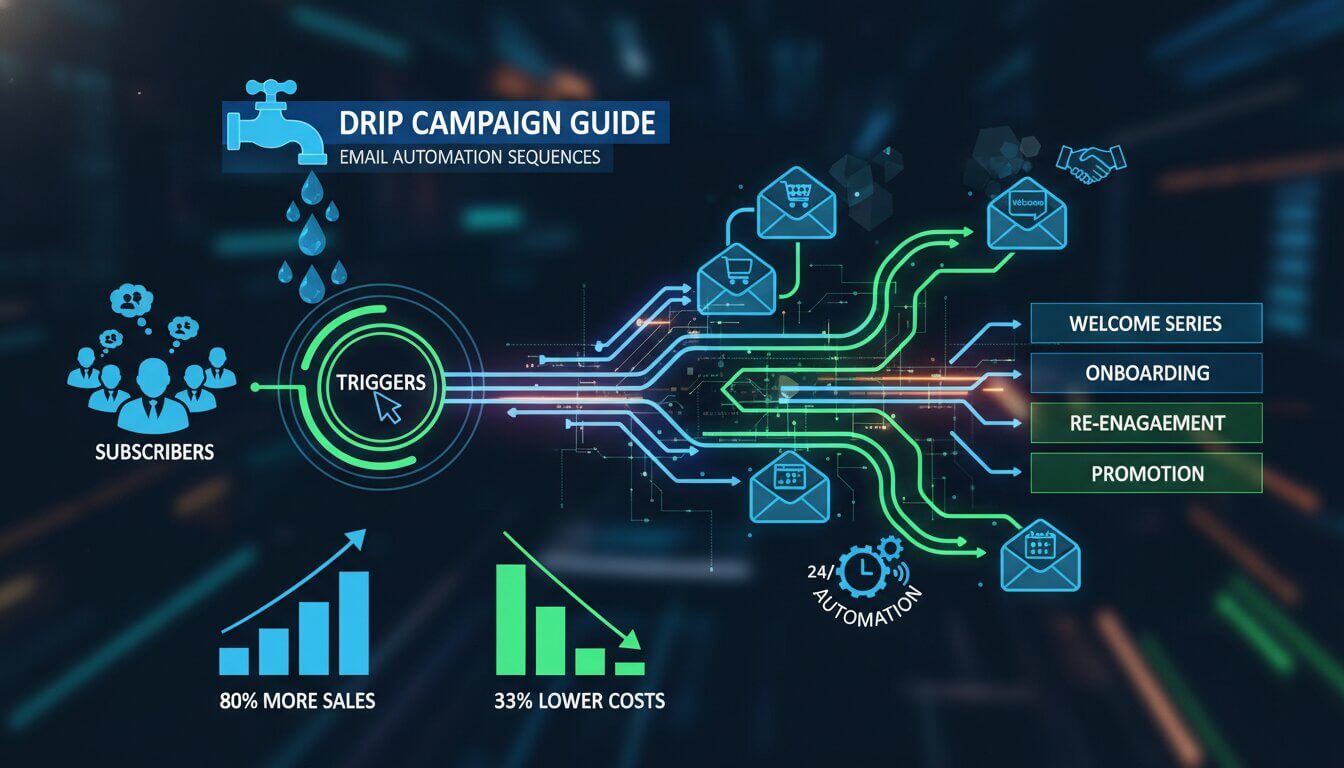
A drip campaign is a series of pre-written emails automatically sent to subscribers based on specific triggers or time intervals. Unlike one-off email blasts sent to your entire list, drip campaigns deliver the right message at the right time based on where each subscriber is in their journey. They ‘drip’ information gradually, building trust and moving recipients toward conversion without overwhelming them.
Drip campaigns are the backbone of email marketing automation. They work while you sleep — nurturing leads, onboarding customers, re-engaging dormant subscribers, and driving repeat purchases 24/7. Businesses using drip campaigns generate 80% more sales with 33% lower costs than those sending manual emails.
Types of Drip Campaigns
Welcome Drip: : Triggered when someone joins your list. Introduces your brand, sets expectations, and delivers promised content. Typically 3-5 emails over 7-14 days.
Lead Nurture Drip: : Triggered when a lead downloads a resource or shows interest. Educates, builds trust, and guides toward a purchase decision. Typically 5-7 emails over 2-4 weeks.
Onboarding Drip: : Triggered by account creation or purchase. Helps new customers get started, discover features, and achieve their first success. Typically 4-6 emails over 2 weeks.
Re-Engagement Drip: : Triggered by inactivity (30-90 days without opening or clicking). Attempts to reactivate dormant subscribers with fresh content and incentives.
Cart Abandonment Drip: : Triggered when items are left in cart. Recovers lost sales with reminders, social proof, and time-limited discounts.
Post-Purchase Drip: : Triggered after a purchase. Delivers value, requests reviews, and introduces complementary products for upselling.
How to Build Your First Drip Campaign?
Step 1: Define the Goal and Trigger
Every drip campaign needs a clear goal (what action you want the recipient to take) and a trigger (what event starts the sequence). The goal might be scheduling a demo call, making a first purchase, completing onboarding, or reactivating engagement. The trigger could be subscribing to a list, downloading a resource, visiting a pricing page, or reaching an inactivity threshold.
Step 2: Map the Email Sequence
Plan each email’s purpose, content focus, and send timing before writing. A typical lead nurture drip might look like: Email 1 (Day 0): Deliver the promised resource + introduce yourself. Email 2 (Day 2): Share a relevant case study or success story. Email 3 (Day 5): Address the biggest objection your audience has. Email 4 (Day 8): Provide additional value with tips or a framework. Email 5 (Day 11): Soft pitch with a special offer or consultation invite.
Step 3: Write Each Email
Write conversational, value-focused emails. Each email should have one primary purpose and one call-to-action. Use the PAS framework (Problem-Agitate-Solve) or the AIDA framework (Attention-Interest-Desire-Action) to structure persuasive email copy. Keep emails concise — 150-300 words per email is the sweet spot for drip sequences.
Step 4: Set Up Automation Logic
Configure the automation in your email platform with conditional logic: if a recipient clicks a specific link, tag them with a relevant interest. If they complete the desired action (purchase, demo booking), remove them from the nurture drip and move them to a post-conversion sequence. If they do not open after 3 emails, consider reducing frequency or changing the subject line approach.
Drip Campaign Timing Best Practices
Email spacing significantly impacts engagement. For welcome and onboarding drips, send emails 1-2 days apart to maintain momentum during peak interest. For lead nurture drips, space emails 2-4 days apart to stay top-of-mind without overwhelming. For re-engagement drips, use longer intervals (5-7 days) to avoid appearing desperate. Always test different timing with your specific audience — optimal intervals vary by industry and audience type.
Measuring Drip Campaign Performance
Track these metrics for each drip campaign: open rate per email (identify which emails underperform), click-through rate (measures content engagement), conversion rate (the ultimate success metric), unsubscribe rate per email (identifies emails that turn people off), and overall campaign conversion rate (percentage of people who enter the drip and complete the desired action). Optimise individual emails that underperform rather than rebuilding entire sequences.
Faqu
Commonly asked questions
By offering concise and informative responses, this section helps users find solutions without the need to contact customer support, saving time
Most drip campaigns contain 3-7 emails. Welcome sequences: 3-5 emails. Lead nurture: 5-7 emails. Cart abandonment: 3 emails. The right number depends on your sales cycle length and offer complexity. Shorter sequences work for simple offers; longer ones for considered purchases.
ActiveCampaign, Mailchimp, ConvertKit, and Drip all offer robust automation features. For e-commerce, Klaviyo is the gold standard. Choose based on your budget, list size, and technical requirements. Most platforms offer free tiers for small lists.
Compare the conversion rate of leads who go through your drip against those who do not. Effective drip campaigns convert 2-5x better than non-nurtured leads. Track overall campaign conversion rate and per-email engagement metrics to identify optimization opportunities.
Get Build Your Drip Campaign
Need help building automated drip campaigns that convert leads into customers? Our email marketing experts design, write, and optimize high-performing email sequences.