Understanding the Core Difference
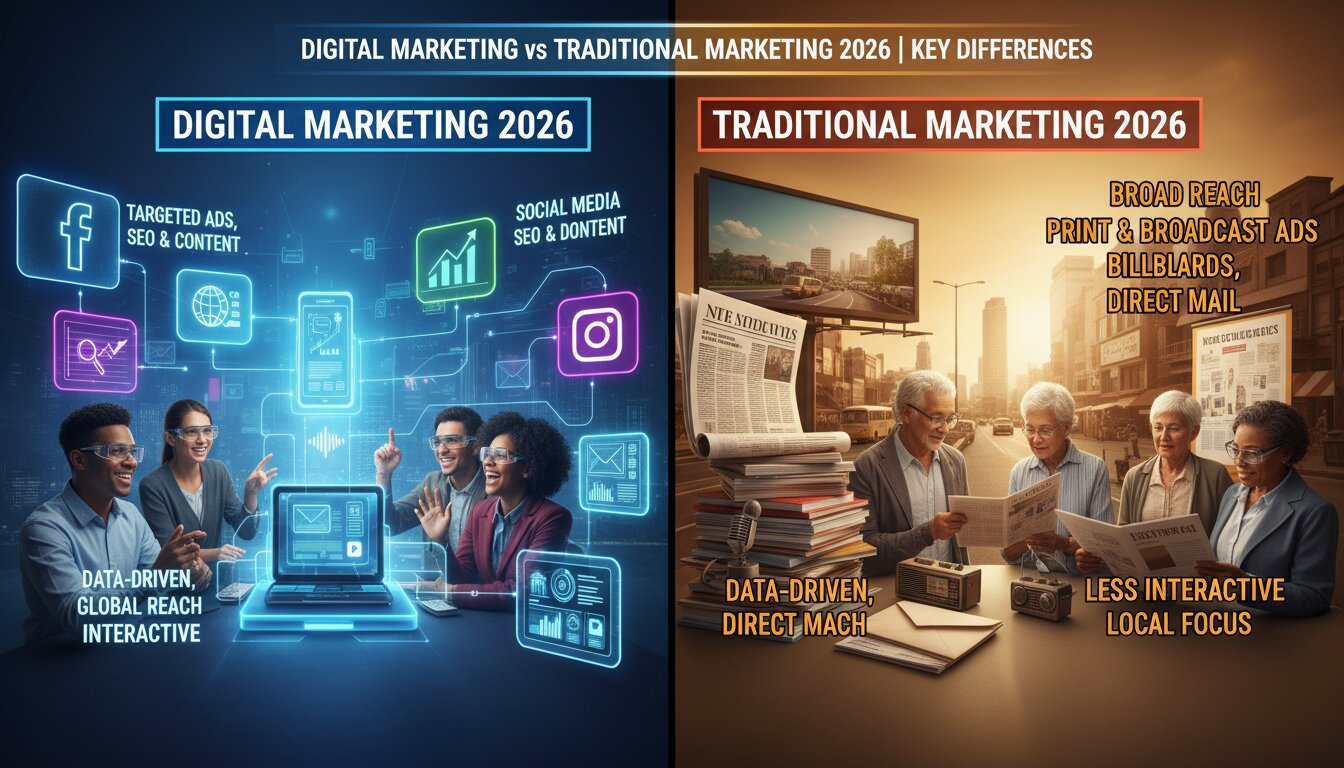
Digital Marketing vs Traditional Marketing : Traditional marketing encompasses offline channels — television, radio, print ads, billboards, direct mail, and telemarketing. These methods broadcast messages to broad audiences hoping to reach potential customers within the mass. Digital marketing, in contrast, leverages online channels — search engines, social media, email, websites, and apps — to target specific audiences with measurable precision.
The fundamental shift is from interruption to attraction. Traditional marketing interrupts audiences during their daily activities (watching TV, reading newspapers), while digital marketing attracts audiences who are actively searching for solutions, engaging with content, or browsing platforms where your message naturally fits into their experience.
Cost Comparison: Marketing Budget Efficiency
Digital marketing offers dramatically lower cost-per-lead than traditional channels. A single newspaper ad can cost ₹50,000–₹5,00,000 with no targeting precision, while a Google Ads campaign can reach the exact people searching for your product at ₹5–₹50 per click. Social media advertising on platforms like Facebook and Instagram allows businesses to start with budgets as low as ₹500 per day while targeting specific demographics, interests, and behaviours.
Small and medium businesses benefit most from digital marketing’s accessibility. A local bakery can run targeted Instagram ads reaching potential customers within a 5-kilometre radius for ₹200 per day — something impossible with traditional media. However, larger brands with mass-market products may still benefit from television or outdoor advertising for broad awareness campaigns that complement their digital strategy.
Targeting Precision and Audience Reach
Traditional Marketing Targeting
Limited to geographic placement (choosing which newspaper, TV channel, or billboard location). Demographic targeting is approximate based on media consumption patterns. No ability to target based on intent or behaviour.
Granular targeting by demographics, interests, behaviours, search intent, purchase history, device type, time of day, and location. Retargeting allows you to reach people who previously visited your website or engaged with your content.
Traditional channels may reach larger total audiences, but digital channels reach more relevant audiences. A billboard seen by 100,000 commuters generates fewer leads than a Google ad seen by 1,000 people actively searching for your service.
Measurability and ROI Tracking
The single biggest advantage of digital marketing is measurability. Every click, impression, conversion, and rupee spent is tracked in real time. Google Analytics shows exactly which channels drive traffic and conversions. Ad platforms provide detailed cost-per-click, cost-per-lead, and return-on-ad-spend metrics. Traditional marketing measurement relies on estimates, surveys, and attribution models that can never precisely identify which ad drove which sale.
This measurability enables continuous optimisation. Digital marketers can A/B test headlines, adjust targeting, reallocate budgets to top-performing channels, and pause underperforming campaigns — all in real time. Traditional campaigns require weeks or months to launch, cannot be modified mid-flight, and provide limited feedback on what worked and what did not.
Speed and Flexibility
Digital campaigns can launch within hours and generate results the same day. A Google Ads campaign can start driving traffic to your website within 30 minutes of approval. Social media posts reach audiences instantly. Email campaigns deliver to thousands of inboxes in seconds. Traditional channels require weeks to months of lead time — print ads need design, approval, and publication cycles; television ads require production and scheduling.
This speed advantage is critical for time-sensitive promotions, seasonal campaigns, and rapid response to market changes. During a competitor’s product recall or a trending industry topic, digital marketers can launch relevant content and campaigns immediately while traditional marketers would miss the window entirely.
When Traditional Marketing Still Makes Sense
Traditional marketing retains value in specific contexts. Luxury brands benefit from the prestige of print magazine advertising. Local businesses in areas with limited internet penetration reach customers through radio and newspaper ads. Large consumer brands use television for mass awareness campaigns that build brand recognition. Events, trade shows, and direct mail campaigns create physical touchpoints that digital channels cannot replicate. The most effective marketing strategies integrate both traditional and digital channels, using traditional media for broad awareness and digital channels for targeted engagement and conversion.
The Verdict: Why Digital-First Is the Right Approach
For most businesses in 2025, a digital-first strategy delivers superior ROI, better targeting, real-time measurement, and greater flexibility. Start with a strong digital foundation — professional website, SEO, social media presence, and email marketing — then layer in traditional channels as your budget and brand require. This approach ensures every marketing rupee is tracked, optimised, and accountable.
Commonly asked questions
By offering concise and informative responses, this section helps users find solutions without the need to contact customer support, saving time
For most businesses, digital marketing delivers better ROI because it offers precise targeting, real-time measurement, lower costs, and greater flexibility. However, the ideal approach often combines both channels strategically based on your audience, industry, and goals.
Yes. Digital marketing is more accessible than traditional marketing for small businesses. You can start Google Ads or social media campaigns with budgets as low as ₹500 per day. SEO and content marketing require time investment but minimal financial outlay compared to traditional advertising.
Digital marketing typically delivers 3-5x better ROI than traditional marketing due to precise targeting and measurability. Email marketing alone averages ₹36 return for every ₹1 spent. However, ROI varies by industry, audience, and execution quality.
Get Your Free Marketing Audit
Not sure whether to invest in digital or traditional marketing? Our strategists will audit your current marketing mix and recommend the optimal channel allocation for your business goals and budget.
Stay ahead with AI insights
Our team brings together deep expertise in AI, design, and technology to build tools that empower your creativity and productivity.