Why a Structured Marketing Budget Matter
Without a documented budget, marketing spend becomes reactive — money flows to whichever channel someone suggests, with no strategic allocation or performance accountability. A structured digital marketing budget forces strategic thinking about channel priorities, expected returns, and resource allocation. It transforms marketing from a cost centre into a measurable investment with clear ROI expectations.
Industry benchmarks suggest businesses should invest 7-15% of total revenue in marketing, with the majority allocated to digital channels. Startups and growth-phase companies typically invest 15-20%, while established brands spend 5-10%. The exact percentage depends on your growth targets, competitive landscape, and customer acquisition cost thresholds.
Step 1: Define Your Marketing Goals
Your budget should be goal-driven, not arbitrary. Start by defining specific, measurable objectives: generate 500 leads per month, achieve ₹10 lakh in monthly revenue from digital channels, increase website traffic by 200%, or reduce customer acquisition cost to ₹500. These goals determine which channels deserve investment and how much. Brand awareness campaigns require different budget allocation than lead generation campaigns.
Step 2: Calculate Your Customer Acquisition Cost (CAC)
Understanding your current CAC is essential for budget planning. Calculate CAC by dividing total marketing spend by the number of customers acquired in the same period. If you spent ₹5,00,000 last quarter and acquired 100 customers, your CAC is ₹5,000. Compare this against your customer lifetime value (CLV) — your CLV should be at least 3x your CAC for a sustainable business model.
Once you know your target CAC and desired number of new customers, you can reverse-engineer your budget. If your target CAC is ₹3,000 and you want 200 new customers monthly, your monthly marketing budget should be approximately ₹6,00,000 — then allocate across channels based on each channel’s historical cost-per-acquisition.
Step 3: Allocate Budget Across Channels
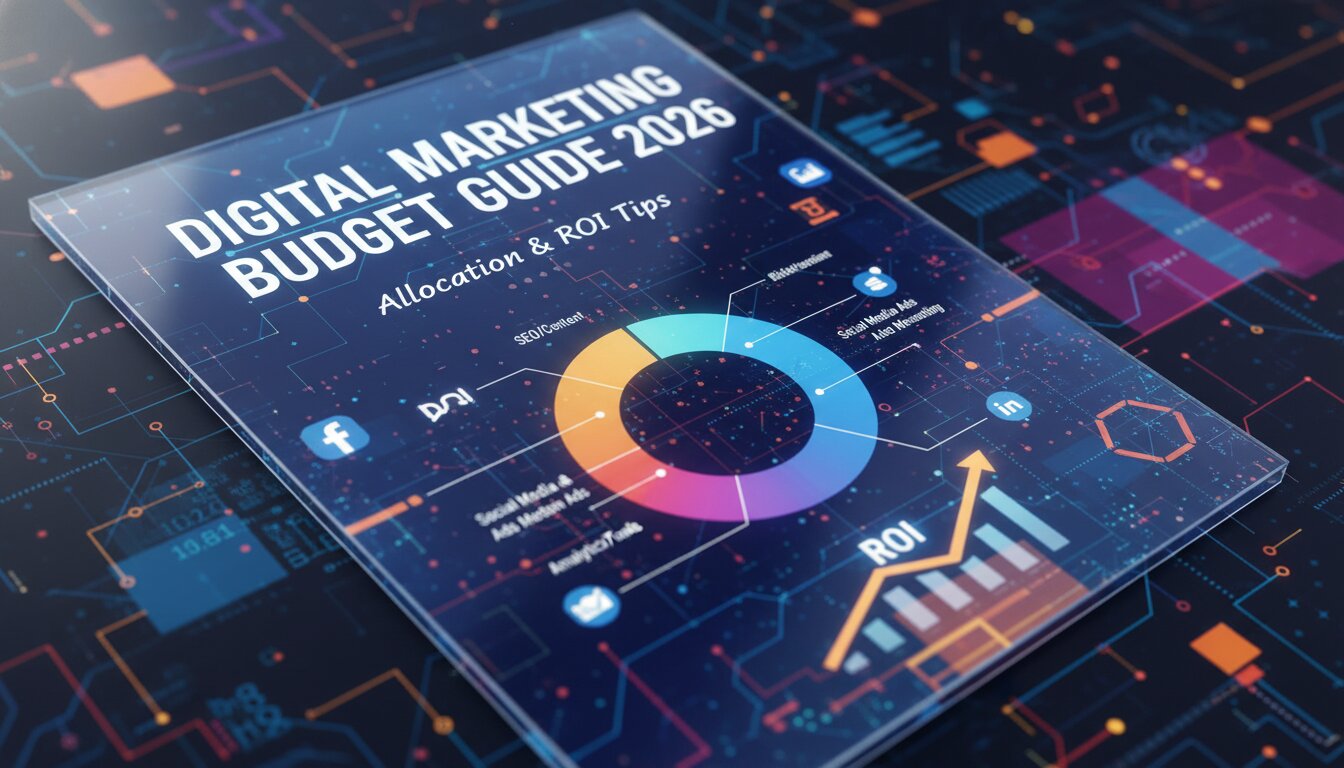
A balanced digital marketing budget allocates investment across multiple channels based on their role in your funnel and expected returns. Here is a recommended allocation framework for growth-stage businesses:
01
SEO & Content Marketing (25-35%)
Long-term investment that compounds over time. Includes content creation, technical SEO, link building, and content distribution. Takes 3-6 months to show significant results but delivers the lowest long-term cost-per-lead.
02
Paid Advertising — PPC & Social Ads (25-35%)
Immediate traffic and leads. Google Ads, Facebook/Instagram ads, LinkedIn ads. Provides fastest results and most measurable ROI. Essential for new businesses that cannot wait for organic growth.
03
Social Media Management (10-15%)
Organic social media presence, community management, and content creation for social platforms. Builds brand awareness and engagement over time.
04
Email Marketing (5-10%)
Highest ROI channel at ₹36 return per ₹1 spent. Investment covers email platform costs, template design, and automation setup.
05
Website & CRO (10-15%)
Website maintenance, landing page creation, A/B testing, and conversion rate optimisation. Improves returns from all other channels.
06
Tools & Analytics (5-10%)
Marketing technology stack — analytics platforms, SEO tools, social media management tools, CRM, and marketing automation software.
Step 4: Set Monthly and Quarterly Review Cycles
A budget is not set-and-forget. Establish monthly performance reviews comparing actual spend versus planned spend and actual results versus targets. Quarterly, conduct deeper analysis of channel ROI and reallocate budget from underperforming channels to top performers. This iterative approach ensures your budget optimisation improves continuously.
Track these key metrics monthly: cost per lead by channel, cost per acquisition by channel, return on ad spend (ROAS), organic traffic growth, conversion rates, and overall marketing ROI. Use Google Analytics, ad platform dashboards, and CRM data to build a comprehensive view of marketing performance.
Budget Allocation by Business Stage
Startup (Year 1-2)
Focus 60-70% on paid channels for immediate results and brand building. Invest 20-25% in SEO and content to build long-term organic traffic. Keep 10-15% for tools and website development. As organic traffic grows, gradually shift budget from paid to organic channels.
Balance shifts to 40% paid, 35% organic/content, 15% email and automation, 10% tools. SEO investment from earlier stages begins compounding, reducing dependency on paid advertising.
Organic channels often deliver 50-60% of leads. Budget allocation: 30% organic/content, 25% paid (focused on high-intent campaigns), 20% email and automation, 15% brand and awareness, 10% tools. Focus shifts from acquisition to retention and lifetime value optimisation.
Commonly asked questions
By offering concise and informative responses, this section helps users find solutions without the need to contact customer support, saving time
Small businesses should invest 7-12% of revenue in marketing, with 60-80% allocated to digital channels. For a business earning ₹50 lakh annually, this translates to ₹3.5–6 lakh per year in digital marketing spend. Start with the channels that offer the most immediate ROI for your business type.
Email marketing typically delivers the highest ROI (₹36 per ₹1 spent), followed by SEO (long-term) and Google Ads (short-term). However, the best channel depends on your industry, audience, and goals. Most businesses see optimal results from a multi-channel approach.
If you need immediate results, invest more in PPC. If you are building for long-term growth, prioritise SEO. The ideal approach starts with PPC for immediate leads while simultaneously building SEO — then gradually shift budget toward organic as SEO gains traction.
Get Your Custom Budget Plan
Need help creating a digital marketing budget tailored to your business goals? Our strategists will analyse your market, competitors, and growth targets to build a custom budget allocation plan.
Stay ahead with AI insights
Our team brings together deep expertise in AI, design, and technology to build tools that empower your creativity and productivity.