Amazon PPC Strategy 2026 | Optimize Sponsored Ads

Leo Daniel Raja

Amazon PPC strategy

Why Amazon PPC Is Essential for Sellers

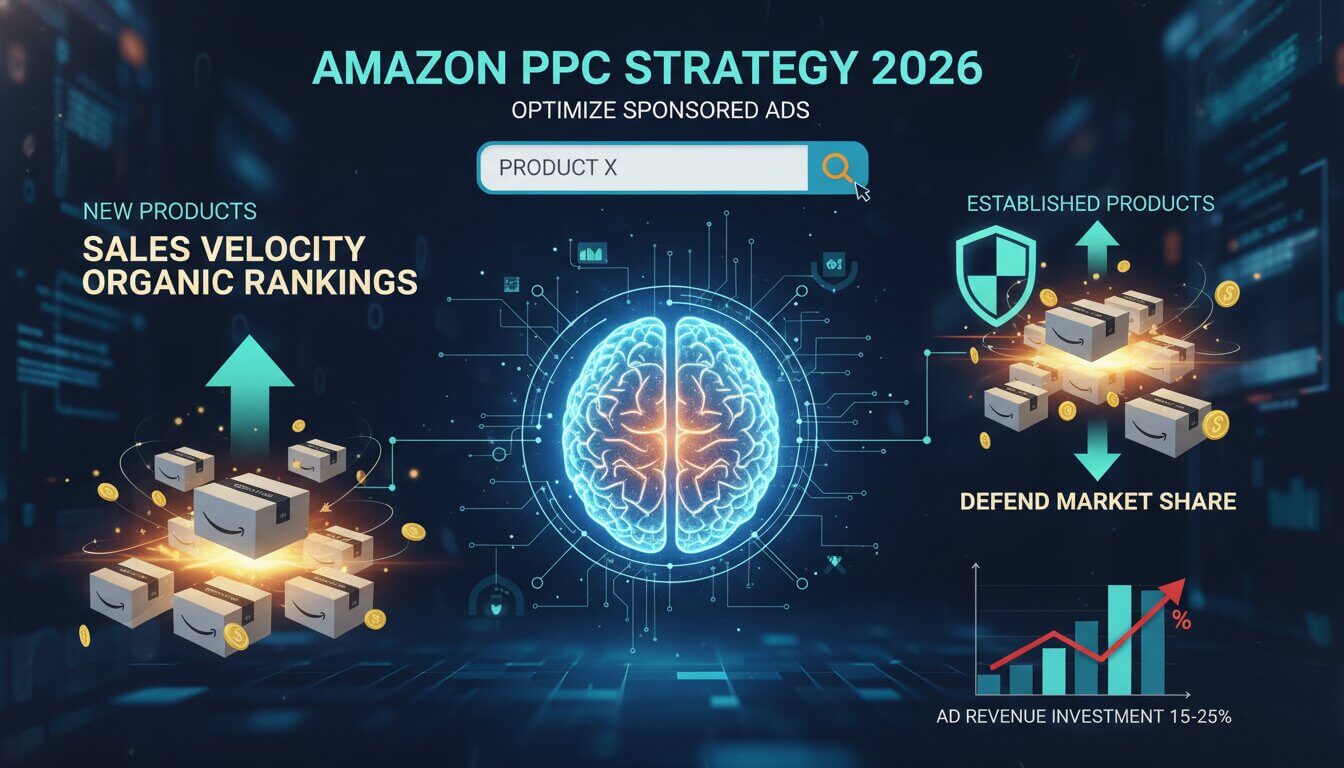
Organic rankings on Amazon are heavily influenced by sales velocity — and Amazon PPC (Pay Per Click) advertising is the fastest way to generate those initial sales. Sponsored Product ads appear at the top of search results, product detail pages, and throughout the shopping experience. With over 60% of product searches starting on Amazon rather than Google, Amazon PPC puts your products directly in front of buyers with high purchase intent.

For new products, PPC is not optional — it is the primary mechanism for generating the sales history needed to rank organically. For established products, PPC defends your market position and captures incremental sales from competitors. The most successful Amazon sellers invest 15-25% of revenue in advertising, gradually reducing this percentage as organic rankings improve.

Understanding Amazon Ad Types

  • Sponsored Products: : The most common and effective ad type. Your product appears in search results and on product pages when shoppers search for relevant keywords. Best for driving direct sales and keyword ranking.
  • Sponsored Brands: : Banner ads at the top of search results featuring your brand logo, custom headline, and multiple products. Best for brand awareness and driving traffic to your brand store.
  • Sponsored Display: : Retargeting ads that follow shoppers who viewed your product or similar products. Appear on and off Amazon. Best for remarketing and competitor targeting.

Campaign Structure Best Practices

A well-structured campaign hierarchy makes optimization manageable. Create separate campaigns for each product or product group. Within each campaign, create three ad group types: an automatic campaign (lets Amazon match your product to relevant searches for keyword discovery), a broad match manual campaign (captures variations and related searches), and an exact match manual campaign (targets your proven high-converting keywords with precise bidding control).

This three-campaign structure creates a keyword discovery funnel. The automatic campaign discovers new converting search terms. High-performing terms graduate to the broad match campaign for scaling. Top performers with consistent conversions move to the exact match campaign with optimized bids. Negate underperforming terms at each level to prevent wasted spend.

Keyword Research for Amazon PPC

Amazon keyword research differs from Google keyword research because every search on Amazon has purchase intent. Use tools like Helium 10, Jungle Scout, or Amazon’s own Brand Analytics to identify high-volume, relevant keywords. Analyze competitor listings for keyword ideas. Review your automatic campaign search term reports to discover which queries actually drive sales. Focus on keywords where your product genuinely matches the search intent — irrelevant clicks waste budget and hurt your conversion rate.

ACoS Optimization: Controlling Ad Spend

ACoS (Advertising Cost of Sales) is your primary profitability metric — it measures what percentage of ad-attributed revenue you spend on advertising. Calculate your break-even ACoS by subtracting your product cost, Amazon fees, and desired profit margin from your selling price. If your product sells for ₹1,000 with ₹400 in costs and fees, your break-even ACoS is 60%. Target an ACoS below break-even for profitable advertising.

Optimize ACoS by: increasing bids on keywords with low ACoS to capture more volume, reducing bids on keywords with high ACoS, pausing keywords with very high ACoS and no signs of improvement, improving product listings to boost conversion rate (which lowers ACoS by generating more sales per click), and adding negative keywords to prevent irrelevant searches from consuming your budget.

Advanced Amazon PPC Tactics

Product Targeting

Target specific competitor ASINs to show your ads on their product pages. This works exceptionally well when your product offers a price, review, or feature advantage.

1 12 DIGIGROWVITY Digital Growth without Limits Amazon PPC Strategy 2026 | Optimize Sponsored Ads Analytics & Reporting Amazon PPC strategy

Dayparting

Analyze which hours and days generate the best ROAS and adjust bids or budgets accordingly. Most categories see peak conversion during evening hours and weekends.

pay per click advertising ppc vibrant colors highly detailed professional photography 1776621890016 DIGIGROWVITY Digital Growth without Limits Amazon PPC Strategy 2026 | Optimize Sponsored Ads Analytics & Reporting Amazon PPC strategy

Budget Allocation

Allocate 60-70% of budget to proven exact match campaigns, 20-25% to broad match for discovery, and 10-15% to automatic campaigns for ongoing keyword research.

1 14 DIGIGROWVITY Digital Growth without Limits Amazon PPC Strategy 2026 | Optimize Sponsored Ads Analytics & Reporting Amazon PPC strategy

Bid Adjustments

Use placement modifiers to increase bids for top-of-search placements, which typically convert 2-3x better than other positions despite higher CPCs.


1 6 DIGIGROWVITY Digital Growth without Limits Amazon PPC Strategy 2026 | Optimize Sponsored Ads Analytics & Reporting Amazon PPC strategy

Weekly PPC Optimization Routine

Dedicate 30-60 minutes weekly to Amazon PPC optimization: review search term reports and add converting terms to manual campaigns, negate non-converting terms (those with 15+ clicks and zero sales), adjust bids based on ACoS targets, review budget utilisation (increase budgets on campaigns hitting daily limits), and check for new keyword opportunities from automatic campaigns. Consistent weekly optimization compounds into significant ROAS improvements over time.

Faq

Commonly asked questions

By offering concise and informative responses, this section helps users find solutions without the need to contact customer support, saving time

A good ACoS depends on your margins and goals. For profitability, target an ACoS below your break-even point (typically 15-30% for most products). For new product launches prioritizing ranking, a higher ACoS (30-50%) may be acceptable as an investment in organic ranking.

Start with ₹500-₹1,000 daily budget per product for initial data collection. After 2-4 weeks of data, optimize and scale profitable campaigns. Most successful sellers spend 15-25% of total revenue on advertising, decreasing as organic rankings improve.

Allow 2-4 weeks for initial data collection before making major optimization decisions. Significant ACoS improvements typically happen within 4-8 weeks of consistent optimization. Full campaign maturity with optimized keyword lists takes 2-3 months.

Get Amazon PPC Management

Want expert Amazon PPC management that maximizes your ROAS? Our Amazon advertising specialists optimize campaigns for profitable growth.

Share this post

Leave a Reply