E Commerce Marketing Guide 2026 | Online Store Growth Strategies

Leo Daniel Raja

1 17 DIGIGROWVITY Digital Growth without Limits E Commerce Marketing Guide 2026 | Online Store Growth Strategies Analytics & Reporting e commerce marketing guide

The E-Commerce Growth Framework

E Commerce Marketing Guide : Growing an e-commerce business requires a systematic approach across three fundamental levers: increasing traffic (more visitors to your store), improving conversion rate (more visitors becoming buyers), and increasing average order value and customer lifetime value (more revenue per customer). Every e-commerce marketing strategy should address all three levers simultaneously for compounding growth.

The e-commerce marketing landscape in India is particularly dynamic, with consumers shopping across their own D2C websites, marketplaces like Amazon and Flipkart, social commerce on Instagram and Facebook, and messaging-based shopping on WhatsApp. Successful e-commerce marketing requires an omnichannel approach that captures demand wherever customers prefer to shop.

Traffic Acquisition: Getting Qualified Visitors to Your Store

E Commerce SEO

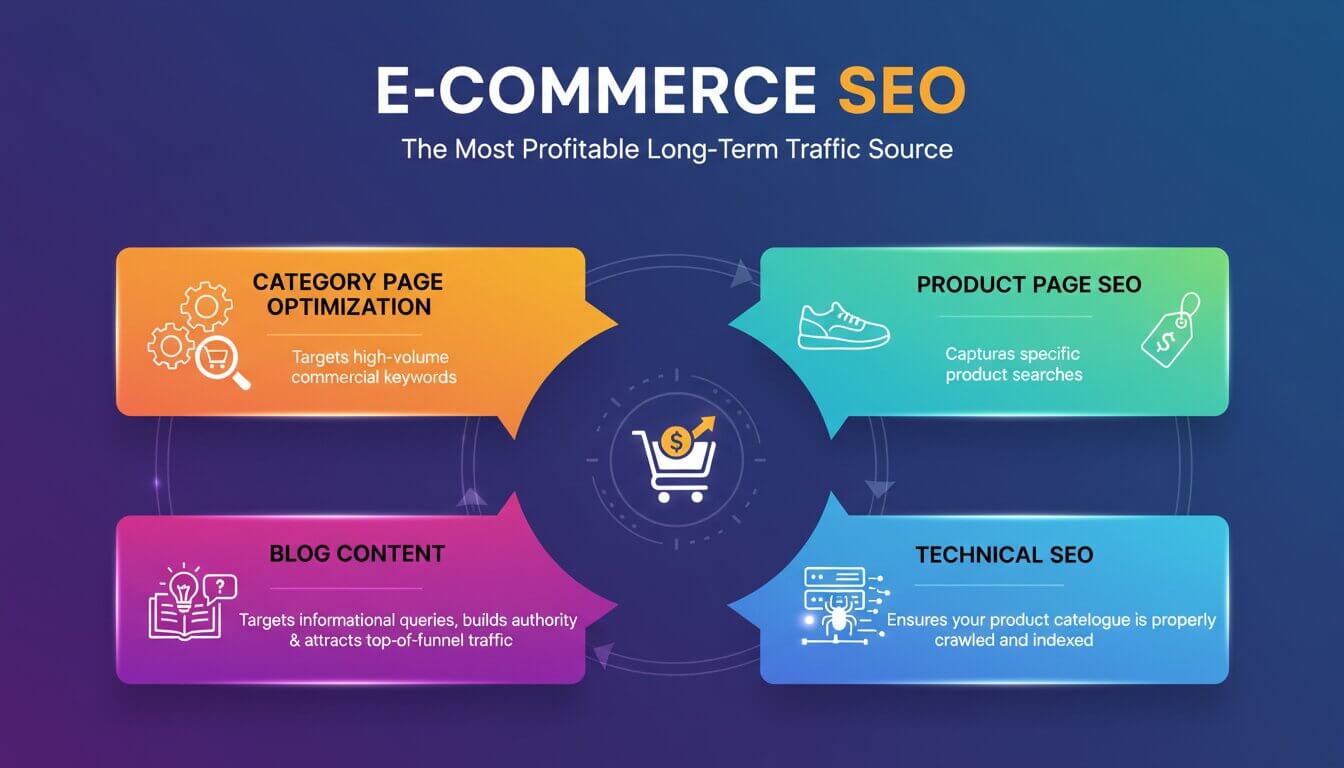
SEO is the most profitable long-term traffic source for e-commerce. Category page optimisation targets high-volume commercial keywords. Product page SEO captures specific product searches. Blog content targets informational queries that build authority and attract top-of-funnel traffic. Technical SEO ensures your product catalogue is properly crawled and indexed.

1 18 DIGIGROWVITY Digital Growth without Limits E Commerce Marketing Guide 2026 | Online Store Growth Strategies Analytics & Reporting e commerce marketing guide

Google Shopping & Performance Max

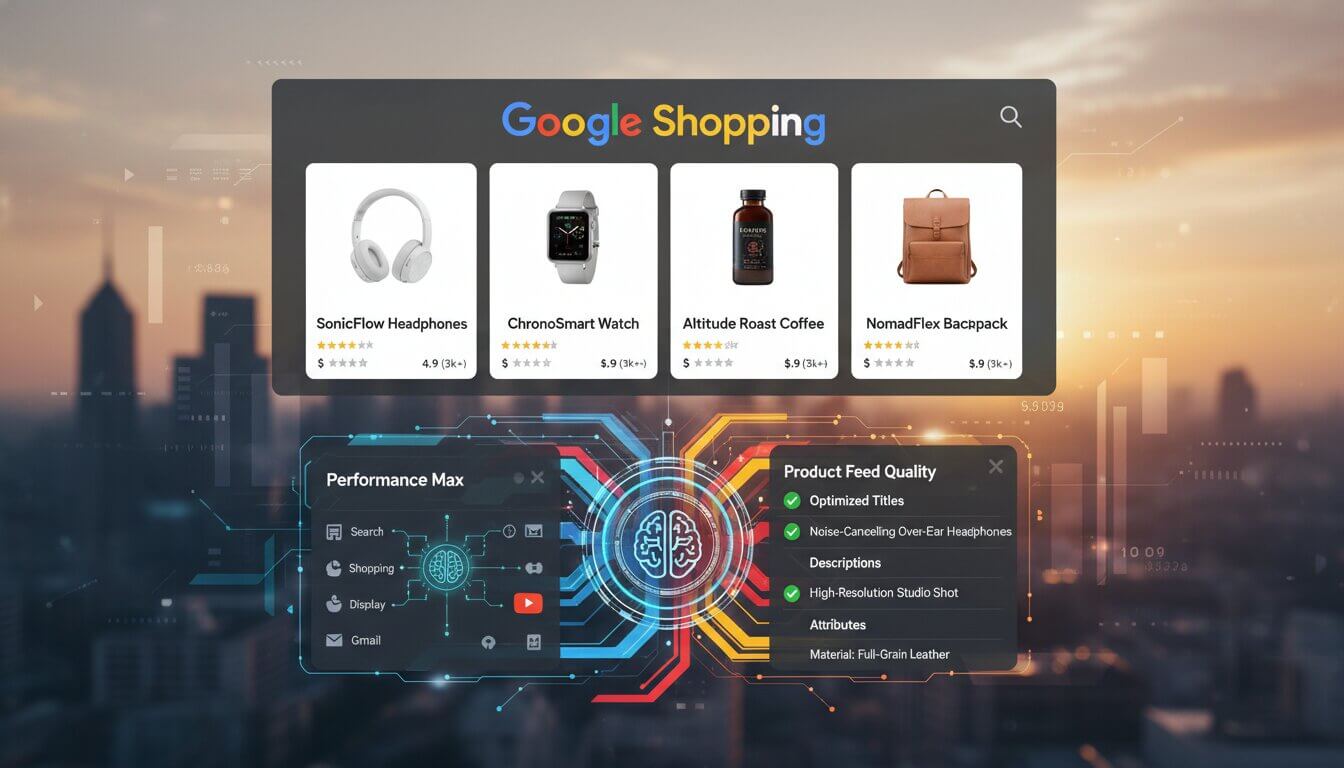
Google Shopping ads place your products with images, prices, and ratings at the top of search results. Performance Max campaigns use AI to optimise across Search, Shopping, Display, YouTube, and Gmail simultaneously. Product feed quality is critical — optimised titles, descriptions, images, and attributes directly impact Shopping ad performance.

1 21 DIGIGROWVITY Digital Growth without Limits E Commerce Marketing Guide 2026 | Online Store Growth Strategies Analytics & Reporting e commerce marketing guide

Social Media & Paid Social

Meta catalogue sales campaigns dynamically show products to users based on browsing behaviour. Instagram Shopping enables direct product discovery and purchase. User-generated content and influencer partnerships drive authentic social proof. Lookalike audiences expand reach to new customers who resemble your best existing buyers.

20 04 2026 4 DIGIGROWVITY Digital Growth without Limits E Commerce Marketing Guide 2026 | Online Store Growth Strategies Analytics & Reporting e commerce marketing guide

Marketplace Marketing

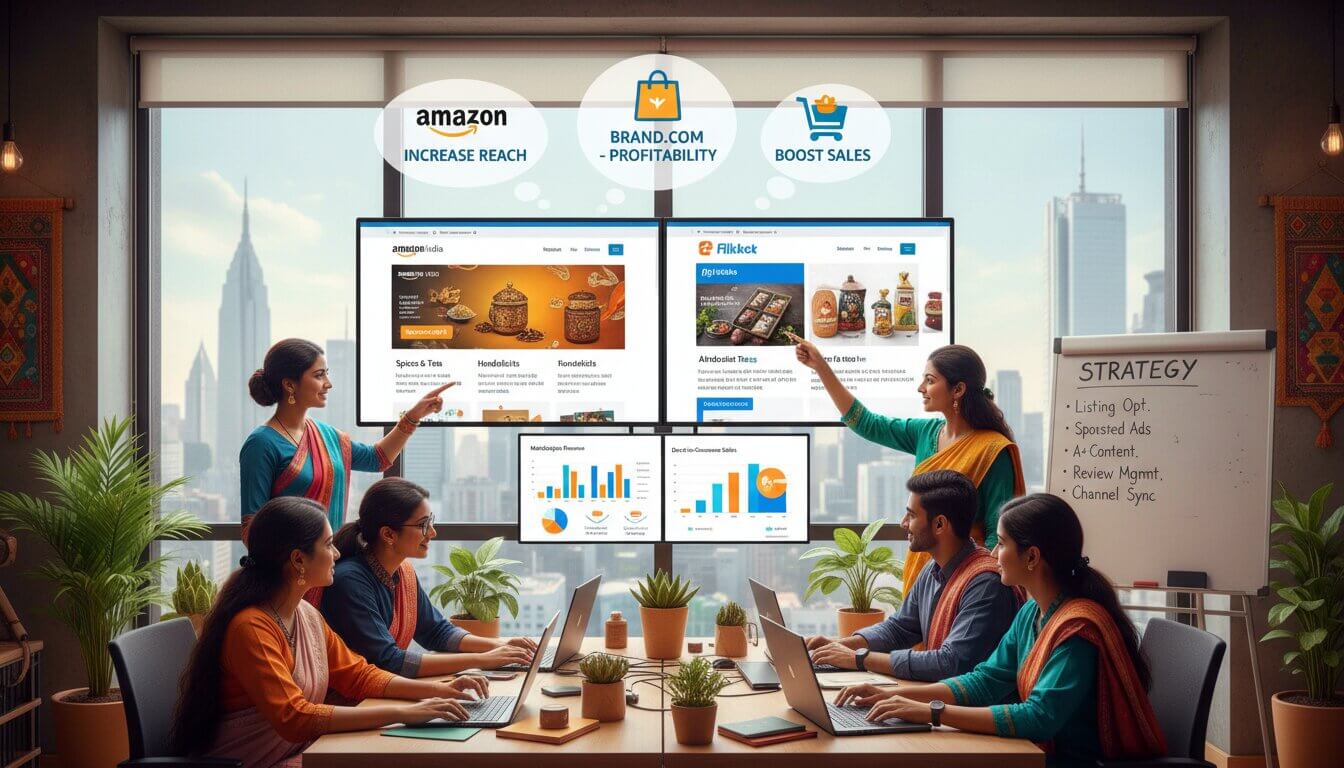
For Indian e-commerce brands, Amazon and Flipkart represent massive sales channels. Listing optimisation, sponsored advertising, A+ Content, and review management drive marketplace revenue. The key is managing marketplace channels alongside your own store without cannibalising direct sales.


20 04 2026 22 DIGIGROWVITY Digital Growth without Limits E Commerce Marketing Guide 2026 | Online Store Growth Strategies Analytics & Reporting e commerce marketing guide

Conversion Optimisation: Turning Visitors into Buyers

Driving traffic to a poorly converting store wastes marketing budget. Conversion rate optimisation systematically improves the percentage of visitors who complete a purchase. Key areas include product page optimisation (high-quality images, compelling descriptions, social proof, clear pricing), checkout flow streamlining (fewer steps, guest checkout, multiple payment options), trust signal implementation (security badges, return policy, customer reviews), and site speed optimisation (every additional second of load time reduces conversions significantly).

A/B testing is essential for conversion optimisation. Test product page layouts, CTA button text and design, pricing displays, shipping offer messaging, and checkout flow variations. Even small improvements — a 0.5% conversion rate increase — translate to significant revenue when applied to thousands of daily visitors.

Retention Marketing: Maximising Customer Lifetime Value

Acquiring a new customer costs five to seven times more than retaining an existing one. E-commerce retention marketing includes post-purchase email sequences (order confirmation, shipping updates, review requests, cross-sell recommendations), loyalty programmes, VIP tiers, early access offers, and win-back campaigns for lapsed customers. Email and WhatsApp marketing are the primary retention channels, delivering personalised communication at low cost.

Subscription models, auto-replenishment reminders, and personalised product recommendations based on purchase history increase repeat purchase rates and average order value. The goal is transforming one-time buyers into repeat customers who generate revenue without additional acquisition cost.

E-Commerce Analytics and Key Metrics

E-commerce success requires tracking metrics across the full funnel: traffic metrics (sessions, users, traffic sources), conversion metrics (conversion rate, add-to-cart rate, checkout completion rate), revenue metrics (average order value, revenue per visitor, gross margin), customer metrics (customer acquisition cost, customer lifetime value, repeat purchase rate), and marketing metrics (ROAS, cost per acquisition, email revenue percentage).

Google Analytics 4, platform-native analytics (Shopify Analytics, WooCommerce reports), and advertising platform dashboards provide the data foundation. Monthly performance reviews should analyse trends, identify opportunities, and inform marketing budget allocation decisions.

Faq’s

Commonly asked questions

By offering concise and informative responses, this section helps users find solutions without the need to contact customer support, saving time

Google Shopping and Search Ads typically deliver the strongest immediate ROI because they capture high-intent purchase searches. SEO provides the highest long-term ROI through free organic traffic. Email marketing delivers the best retention ROI. The optimal strategy combines multiple channels — paid for immediate results, SEO for long-term growth, and email for retention.

Cart abandonment averages over 70% across e-commerce. Reduce it through streamlined checkout (fewer steps, guest checkout), transparent pricing (no surprise fees), multiple payment options (UPI, cards, COD, EMI), trust signals (security badges, return policy), and cart recovery campaigns via email and WhatsApp that remind and incentivise completion.

Ideally both. Marketplaces (Amazon, Flipkart) provide massive existing traffic and trust. Your own store provides higher margins, customer data ownership, and brand control. A multi-channel strategy maximises total revenue while building long-term brand equity through your owned platform.

Shopify is our most common recommendation for its ease of use, app ecosystem, and scalability. WooCommerce on WordPress offers maximum flexibility for content-heavy stores. Magento suits enterprise-scale operations. The right platform depends on your catalogue size, customisation needs, and technical resources.

Get Your Free E-Commerce Audit

Ready to scale your e-commerce revenue? Get a free e-commerce marketing audit with specific growth recommendations.

Share this post

Leave a Reply